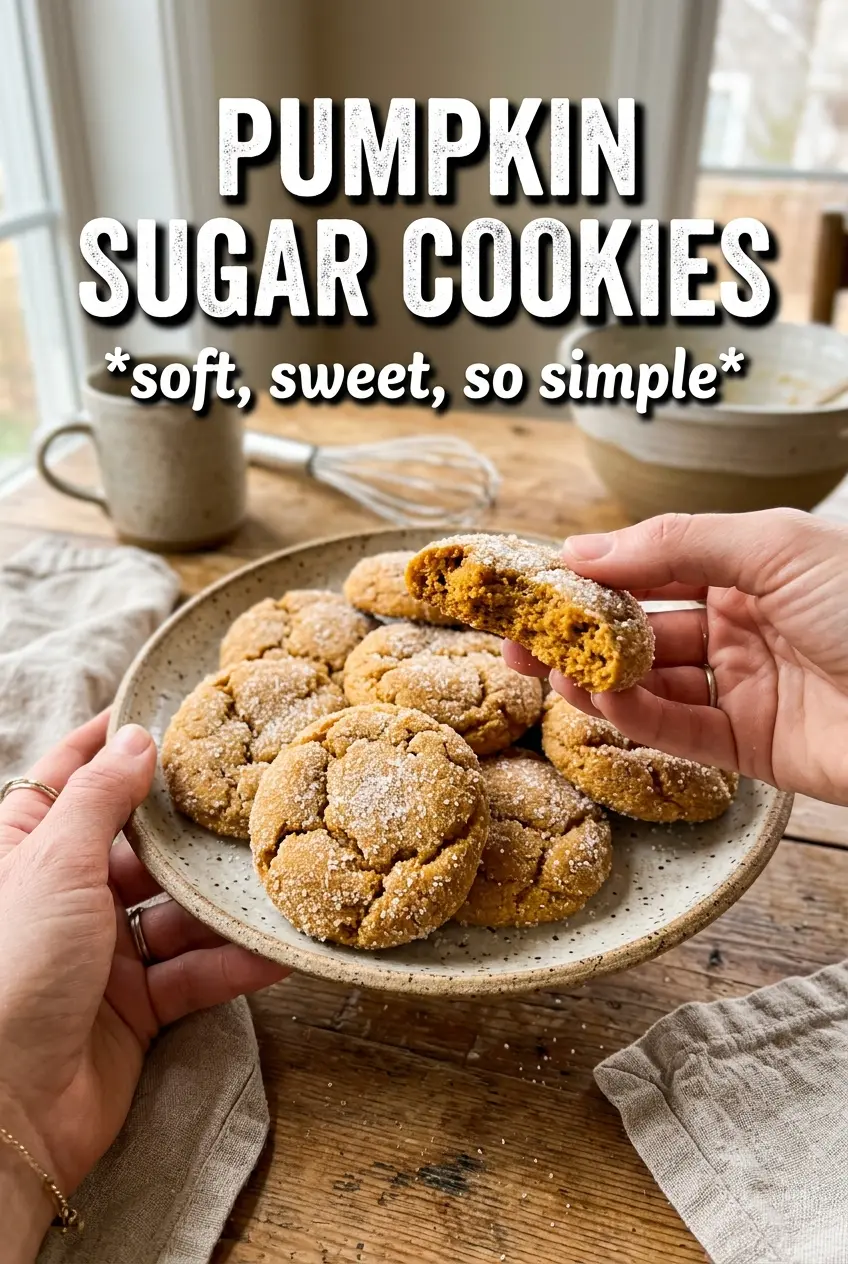
Pumpkin sugar cookies bake up soft in the center with clean edges, a gentle spice warmth, and that classic sugar-cookie bite that makes them easy to stack, frost, and decorate. The pumpkin doesn’t turn them cakey when it’s handled right; it adds a mellow flavor and a little tenderness without losing the cut-out shape. Finished with cream cheese frosting, they hit that sweet spot between a holiday cookie and an everyday cookie you keep sneaking from the tray.
The detail that matters most here is the pumpkin puree. It has to be blotted dry before it goes into the dough, or the cookies spread too much and bake up puffy instead of neat. The dough also needs that hour in the fridge, which gives the butter time to firm up again and keeps the cut-outs sharp in the oven.
Below, I’ve included the little things that keep these cookies from going soft or sticky in the wrong way, plus the frosting trick that gives you that smooth orange swirl without thinning it out.
The dough rolled out cleanly after chilling, and the cookies stayed soft without puffing up too much. The cream cheese frosting was thick enough to hold the swirls, and the pumpkin spice came through without tasting heavy.
These pumpkin sugar cookies keep their shape and frost beautifully, so they’re worth pinning for cookie trays, bake sales, or any time you want soft cut-outs with cream cheese frosting.
The Pumpkin Purée That Can Ruin the Dough if You Rush It
Cut-out cookie dough lives or dies by moisture control. Pumpkin puree brings flavor and color, but it also brings water, and too much of it turns a crisp-edged cookie into a sticky dough that spreads before it sets. Blotting the puree dry changes the texture of the dough in a way a little extra flour can’t fully fix later.
The other piece people miss is chilling. Warm butter makes the dough easy to roll, but that same softness works against you in the oven. One hour in the fridge gives the flour time to hydrate and the butter time to firm back up, which is what keeps the cookies neat and tender instead of flat and greasy.
What Each Ingredient Is Actually Doing in These Cookies

- Pumpkin puree — Use a small amount, and blot it until it feels almost pasty. That extra minute with paper towels is what keeps the dough from turning loose and cakey.
- Unsalted butter — Softened butter creams properly with the sugar, giving the cookies their tender bite. Salted butter works in a pinch, but the flavor is easier to control with unsalted.
- Flour — All-purpose flour gives these cookies enough structure to roll and cut cleanly. Spoon and level it so you don’t pack in too much and end up with dry cookies.
- Pumpkin pie spice and cinnamon — This combo gives the cookies that warm bakery flavor without overpowering the frosting. The cinnamon sharpens the spice blend and keeps the pumpkin from tasting flat.
- Cream cheese frosting — This frosting balances the sweetness and adds that tangy finish that makes pumpkin cookies taste complete. Beat it until smooth before adding color so the orange stays even instead of streaky.
Rolling, Cutting, and Baking Without Losing the Shape
Building the Dough
Cream the butter and sugar until it looks pale and fluffy, then add the blotted pumpkin, egg, and vanilla. Once the wet ingredients are in, the dough may look a little softer than a classic sugar cookie dough, but that’s normal before the flour goes in. Fold in the dry ingredients just until no flour streaks remain; overmixing here makes the cookies tougher and can warm the dough faster than you want.
Chilling for Clean Edges
Divide the dough before it chills so it’s easier to roll later, then refrigerate it for the full hour. If the dough still feels sticky after chilling, dust the surface lightly with flour instead of working in a lot more flour at the bowl stage. Too much flour here dries out the cookie and dulls the pumpkin spice.
Baking to the Right Set
Roll the dough to 1/4 inch thick and cut the shapes with clean, sharp edges. Bake at 350F until the edges look set and the centers have lost their raw sheen, usually 10 to 12 minutes. Pull them before they turn deeply golden; these cookies finish setting as they cool, and overbaking is what turns them dry.
Frosting After Full Cooling
Let the cookies cool completely before frosting or the cream cheese layer will melt and slide. Beat the frosting until it’s smooth and spreadable, then tint it with orange food coloring a little at a time so you don’t overshoot the shade. A thick frosting holds the swirls and decorations much better than a loose one.
Three Ways to Make These Pumpkin Sugar Cookies Work for Your Kitchen
Gluten-Free Version
Use a good 1:1 gluten-free baking flour that includes xanthan gum. The cookies will be a touch more delicate when rolled, but chilling the dough well helps them hold their shape and keeps the texture soft instead of crumbly.
Dairy-Free Option
Swap in a plant-based butter stick for both the cookie dough and the frosting. The cookies still bake up tender, though the frosting will be a little softer, so chill it briefly if you want a cleaner swirl on top.
No Cream Cheese Frosting
A simple vanilla buttercream works if you want a sweeter, less tangy finish. You’ll lose the slight contrast that cream cheese brings, but the cookies still taste balanced if you keep the frosting layer thin.
Making Them Ahead
The dough can be chilled overnight, and baked cookies hold well unfrosted until the next day. If you need the best-looking finish, frost them the day you plan to serve them so the swirl stays fresh and clean.
Storage and Reheating
- Refrigerator: Store frosted cookies in a single layer or with parchment between layers for up to 4 days. The frosting stays best when the cookies are chilled.
- Freezer: Freeze the unfrosted cookies for up to 2 months. Frosting doesn’t freeze as cleanly, so add the cream cheese topping after thawing for the best texture.
- Reheating: These don’t need reheating. If you want to soften unfrosted cookies after freezing, let them thaw at room temperature for about 30 minutes instead of warming them, which can make the edges dry out.