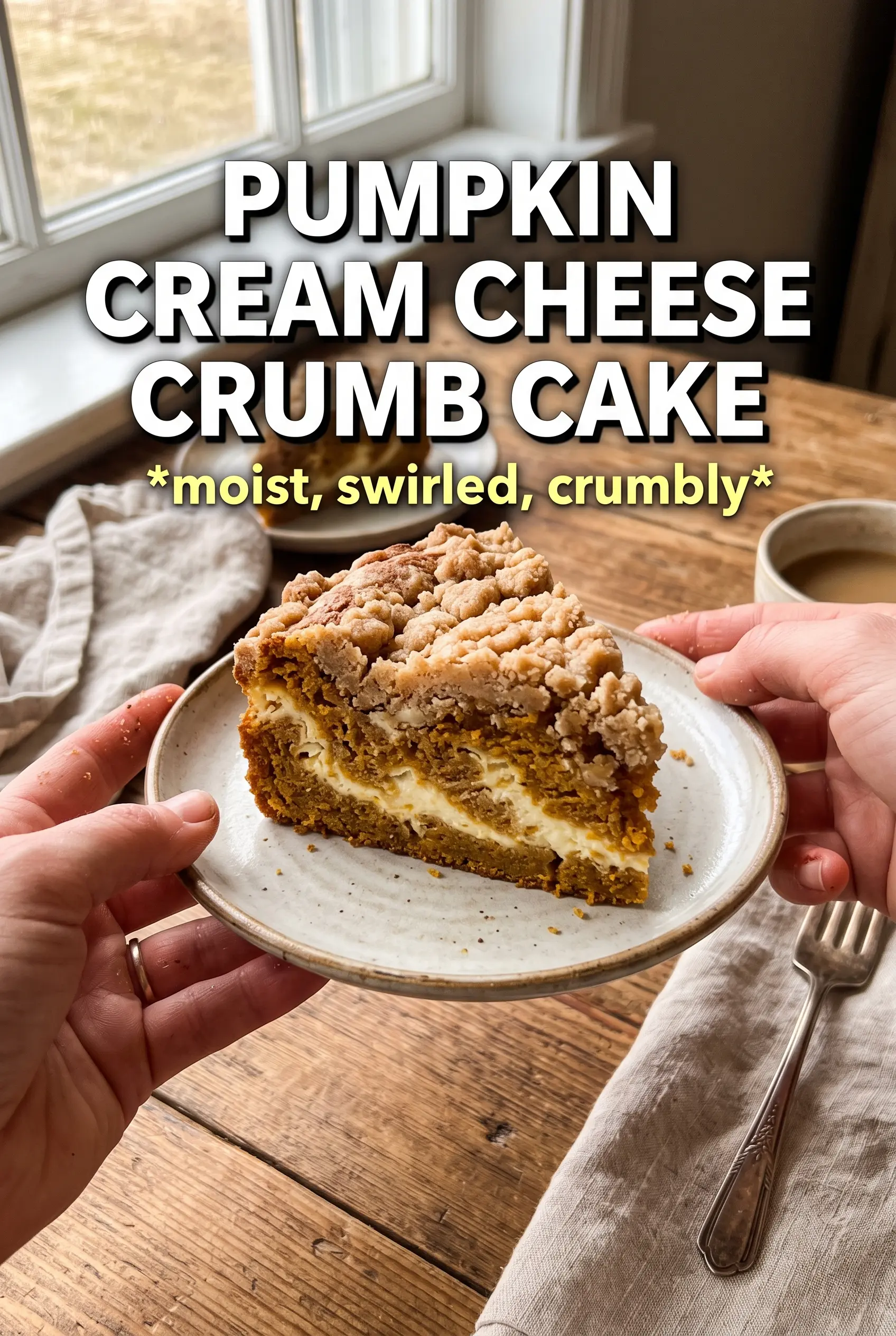
Pumpkin cream cheese crumb cake bakes up with three things that make people go back for a second slice: a soft pumpkin crumb, a cool tangy cream cheese ribbon, and a thick cinnamon streusel that stays crisp on top instead of melting into the batter. It eats like a coffee cake, but the cream cheese layer turns it into something a little more special without adding extra fuss.
The trick is keeping the crumb topping cold and the cream cheese layer smooth before anything goes into the pan. If the streusel warms up, it turns sandy instead of clumpy. If the cream cheese isn’t beaten fully smooth, you’ll get little soft pockets instead of a clean swirl. The batter itself is sturdy enough to hold both layers, but it still bakes tender because the pumpkin and sour cream keep it moist.
Below, I’ve included the small details that matter most: how to get the crumb topping into big buttery clusters, how to spread the batter without dragging the cream cheese layer around, and what to look for when the center is baked through but still soft enough to stay plush.
The crumb topping stayed crisp even after the cake cooled, and the cream cheese layer baked into a perfect stripe instead of sinking. I served it warm and everyone kept cutting “just a sliver” until the pan was gone.
Save this pumpkin cream cheese crumb cake for a brunch bake with a tangy middle, buttery streusel, and a soft pumpkin crumb.
The Part That Keeps the Cream Cheese Layer From Disappearing
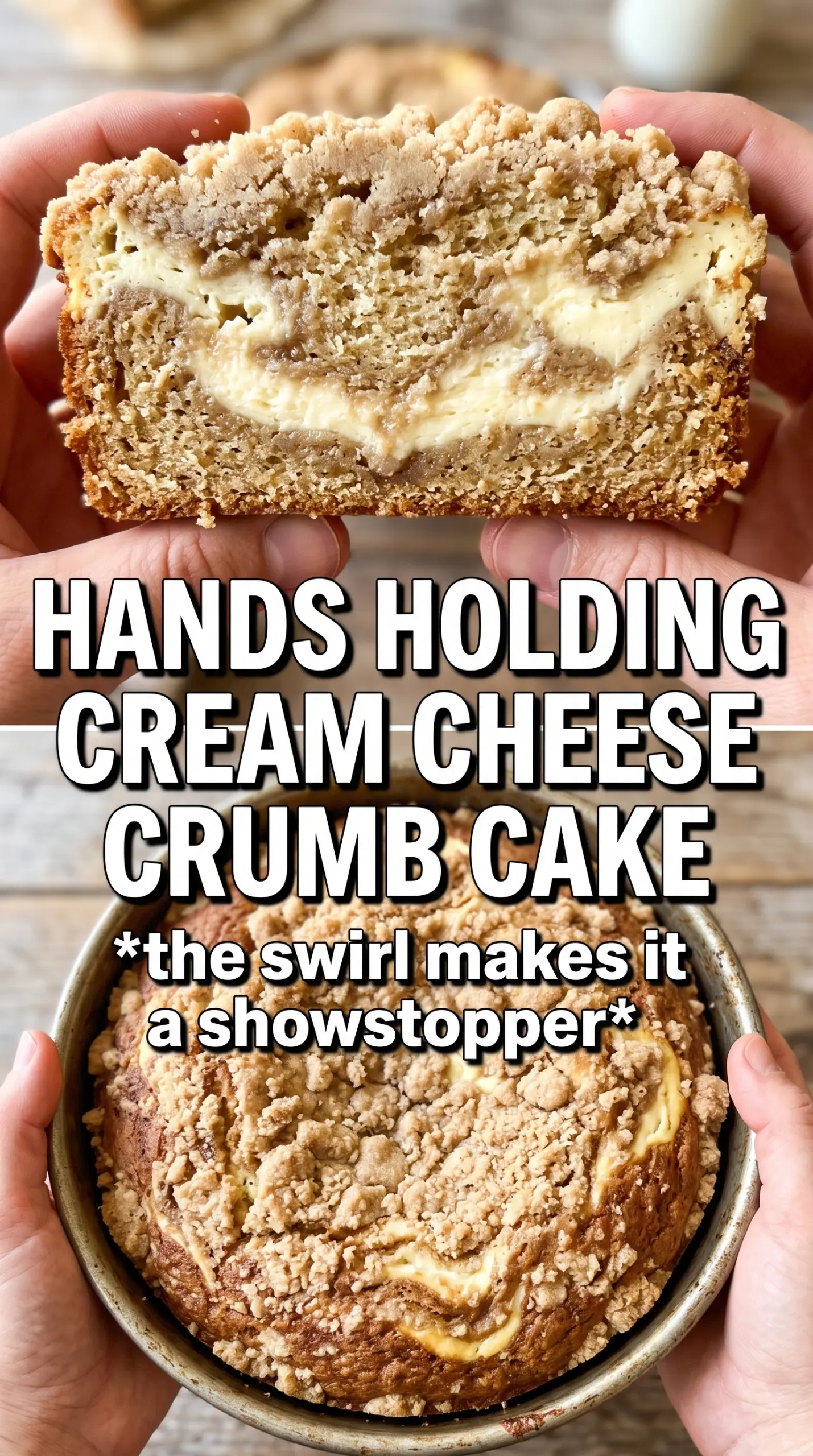
Most crumb cakes with a cream cheese swirl fail for one simple reason: the batter is too loose to hold a distinct middle layer, or the cream cheese mixture is too thick to spread without tearing the cake underneath. This version avoids both problems by keeping the pumpkin batter substantial and the cream cheese layer loose enough to glide, but not so loose that it soaks in.
The other detail that matters is the crumb topping. A cold streusel bakes into those big irregular nuggets people actually want on a coffee cake. If it goes on warm, it melts fast and turns into a thin sugary sheet. Refrigerating it while you mix the rest of the batter keeps the texture sharp and buttery.
- Brown sugar — It gives the crumb topping depth and keeps the cake moist. Light or dark brown sugar both work here, but dark brown sugar gives a deeper molasses note.
- Sour cream — This is what keeps the crumb tender without making it wet. Plain full-fat Greek yogurt works in a pinch, but the cake will be a little less rich.
- Pumpkin puree — Use pure pumpkin, not pumpkin pie filling. Pie filling is already sweetened and spiced, which throws off both the texture and the balance of the cake.
- Cream cheese — Full-fat cream cheese gives the cleanest layer and the best tang. Low-fat cream cheese tends to bake softer and can weep a little more.
What Each Layer Needs Before It Goes Into the Pan
- Flour — All-purpose flour keeps the crumb topping sturdy and the cake tender. For the cake, spoon and level it so you don’t pack in too much and make the crumb dry.
- Butter — Melted butter is what creates those big crumb clusters. For the cake batter, softened butter creams with the sugar and traps air, which gives the finished cake lift.
- Eggs — The cream cheese layer needs one egg to set into a sliceable ribbon. The cake batter needs two eggs for structure, so the center bakes up soft instead of dense.
- Pumpkin pie spice and cinnamon — Together they give the cake warmth without making it taste like one-note spice bread. If you only have cinnamon, add a little extra, but the pie spice adds the rounded background flavor that makes the pumpkin taste fuller.
Building the Layers So the Middle Bakes Cleanly
Mixing the Crumb First
Start with the crumb topping so it has time to chill while you work. Stir the flour, brown sugar, and cinnamon into the melted butter until the mixture forms uneven clumps, not a smooth paste. If it looks sandy, press it together with your fingers a few times until the pieces hold. Refrigeration is what gives you the thick topping that stays craggy in the oven.
Smoothing the Cream Cheese Layer
Beat the cream cheese, sugar, egg, and vanilla until it’s completely smooth and glossy. Stop and scrape the bowl, because any unblended cream cheese will leave little soft lumps in the finished layer. The mixture should spread easily but still hold its shape when you dollop it over the batter. If it looks runny, the cream cheese was too warm.
Assembling Without Mashing the Batter
Spread half the pumpkin batter into the prepared pan in an even layer. Dollop the cream cheese mixture over the top and spread it gently, then cover with the remaining batter in spoonfuls rather than one heavy dump. A light hand matters here because dragging a spatula through the cream cheese layer will smear it into the cake instead of leaving a distinct ribbon. Scatter the chilled crumb topping over everything before baking.
Knowing When It’s Done
Bake until the top is deep golden and the center no longer looks wet when you gently nudge the pan. The cake should spring back lightly at the edges, and a tester inserted into the cake part should come out with a few moist crumbs, not raw batter. If the top browns before the center is set, lay a loose piece of foil over it for the last stretch of baking. Let it cool before dusting with powdered sugar so the finish stays clean.
How to Adjust This Cake for Different Moods and Timelines
Make It Dairy-Free
Use plant-based butter in both the crumb and the cake, and swap in a dairy-free cream cheese that bakes well. The texture will still be soft, but the tang will be a little milder, so the vanilla matters more in the filling.
Gluten-Free With the Least Drama
Use a 1:1 gluten-free baking flour in both parts of the recipe. The crumb topping will be a little more delicate and the cake may need a few extra minutes in the oven, but it still slices well once it cools completely.
Extra Streusel on Top
If you want more crunch, make 1 1/2 times the crumb topping. The cake can handle it, and the extra layer gives you more of that bakery-style finish, especially if you serve it warm.
Storage and Reheating
- Refrigerator: Store covered for up to 4 days. The cream cheese layer firms up in the fridge, but the cake stays moist.
- Freezer: Freezes well in individual slices. Wrap tightly and freeze for up to 2 months, then thaw overnight in the refrigerator.
- Reheating: Warm slices in the microwave for 15 to 20 seconds, just enough to soften the crumb without melting the cream cheese layer completely. Overheating makes the topping lose its crunch.