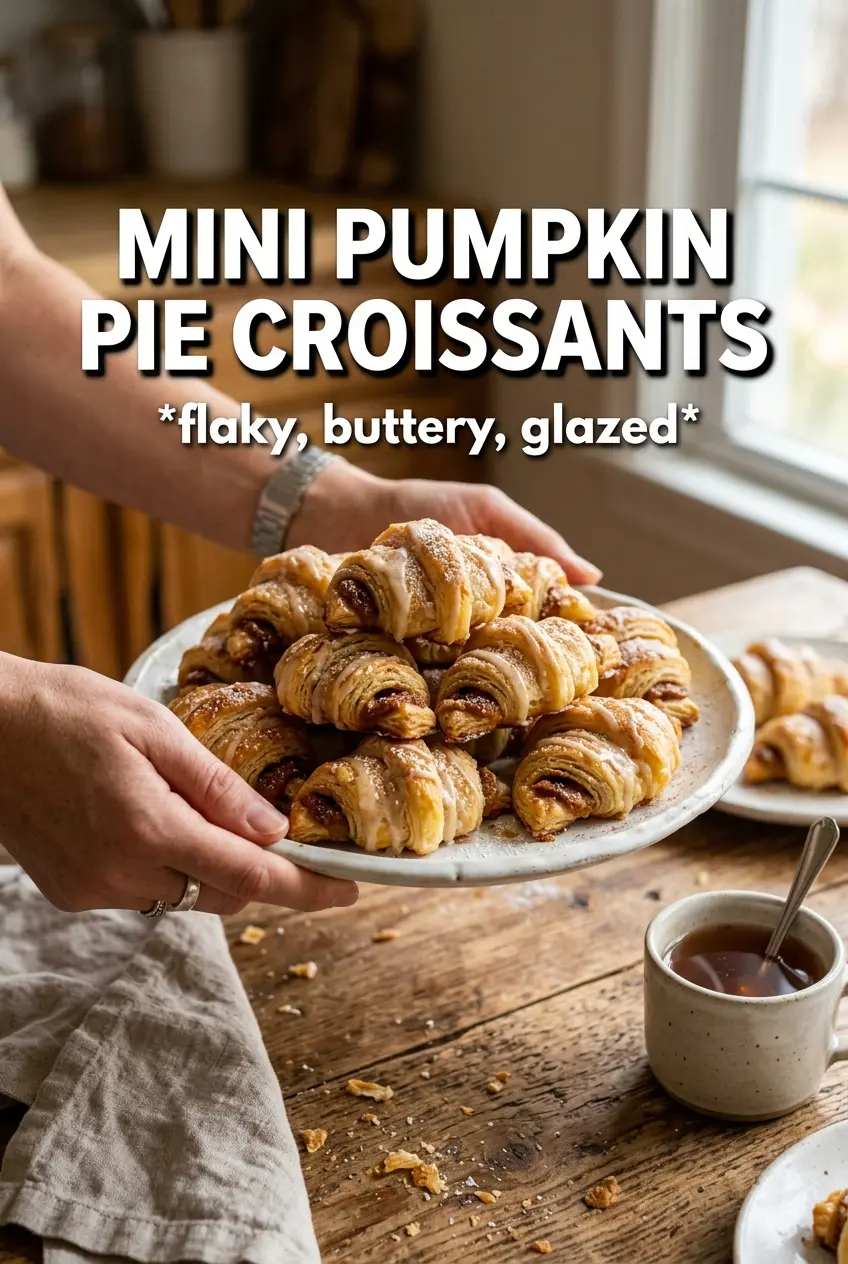
Mini pumpkin pie croissants bake up with crisp, buttery layers outside and a soft pumpkin-spiced center that tastes like a cross between breakfast pastry and a bite-sized pie. The edges turn deeply golden in the oven, and the cinnamon sugar on top gives each one a light crackle that makes the first bite even better.
What keeps these from turning soggy is the filling balance. Pumpkin puree brings the flavor, but a little cream cheese thickens it enough to stay put inside the crescent dough instead of leaking all over the pan. Rolling them from the wide end to the tip helps seal the seam under the pastry so they bake up neat, with just a little filling peeking out at the ends.
You’ll find the small details below that matter most: how much filling to use, when the croissants are actually done, and how to keep the glaze from disappearing into the pastry instead of sitting on top where it belongs.
The filling stayed put, the bottoms browned beautifully, and the cinnamon glaze set just enough that they didn’t get sticky. I made them for Sunday breakfast and the tray was gone before coffee was finished.
Save these mini pumpkin pie croissants for a quick breakfast pastry with creamy pumpkin filling, cinnamon sugar crunch, and a warm vanilla glaze.
The Small Amount of Filling That Keeps These Croissants from Bursting
The biggest mistake with filled crescent dough is overstuffing it. Pumpkin puree softens as it bakes, so a heaping teaspoon is enough for each triangle. More than that and the filling will push out the seam before the dough has a chance to set.
These also bake best when the seam ends up underneath the croissant on the sheet pan. That little detail helps hold the roll together as the dough puffs and browns. If the triangles feel sticky or warm, chill the filling for a few minutes before assembling; cold filling is easier to portion and less likely to smear across the dough.
What Each Ingredient Is Doing in the Pumpkin Filling

- Refrigerated crescent roll dough — This gives you the flaky, buttery shell without making dough from scratch. Other pastry doughs can work, but crescent dough bakes into soft layers that hold the filling well and brown fast.
- Pumpkin puree — Use plain pumpkin puree, not pumpkin pie filling. The canned pie filling already has sugar and spices mixed in, which makes the croissants too sweet and throws off the texture.
- Cream cheese — This is the ingredient that keeps the filling thick enough to stay put. If you skip it, the pumpkin mixture loosens and tends to leak more during baking.
- Brown sugar and spices — Brown sugar adds depth and helps the filling taste rounded instead of flat. The cinnamon, nutmeg, ginger, and pumpkin pie spice work together, but cinnamon carries the strongest note here, so don’t reduce it unless you want a milder finish.
- Melted butter and cinnamon sugar — Brushing the dough with butter before baking helps the tops turn glossy and crisp. The sugar mixture gives you that bakery-style crackly top, and it’s worth doing instead of dusting only after baking.
- Powdered sugar glaze — The glaze should be thin enough to drizzle, not flood the pastry. Add the milk slowly; too much and it turns runny and disappears into the croissants instead of setting on top.
Rolling, Baking, and Glazing Without Losing the Filling
Mix the filling until it looks smooth, not fluffy
Beat the pumpkin puree, brown sugar, spices, vanilla, and softened cream cheese until the mixture is completely smooth. You want it thick and spreadable, with no lumps of cream cheese left behind, because those lumps make it harder to portion evenly. If the filling looks loose, give it a minute or two to sit; it thickens slightly as the sugar starts to pull moisture from the pumpkin.
Roll from the wide end and tuck the tip underneath
Place the filling at the widest part of each triangle, then roll toward the point without pressing so hard that the filling squeezes out the sides. Finish with the tip tucked underneath the croissant so it stays sealed while baking. If the dough tears, overlap the torn edge a little and keep going; crescent dough forgives small mistakes better than most pastry doughs.
Bake until the tops are deeply golden
These need the full color to taste right. Pull them too early and the dough tastes pale and underbaked, especially where it overlaps at the seam. You’re looking for a deep golden top with browned edges and a pastry that feels set when nudged gently with a spatula.
Drizzle while the pastries are still warm
Let the croissants cool just enough that they don’t collapse when you move them, then drizzle on the glaze while they’re still warm. That’s the sweet spot where it melts slightly into the ridges but still sits visibly on top. If the pastries are hot, the glaze runs off; if they’re fully cool, it can set too hard and lose that soft finish.
How to Change These for Different Mornings
Dairy-Free Version
Swap the cream cheese for a dairy-free cream cheese and use plant-based milk in the glaze. The filling stays thick enough to hold, though the flavor will be a little less tangy and the glaze may set a touch softer.
Extra-Spiced Filling
Add an extra 1/4 teaspoon of cinnamon or a pinch more pumpkin pie spice if you want the filling to lean warmer and more aromatic. This works best if you like a stronger spice note over a sweeter, milder pumpkin center.
Make-Ahead Assembly
You can assemble the croissants a few hours ahead, cover them, and refrigerate until baking time. Hold off on the butter, cinnamon sugar, and glaze until just before they go in the oven and come out again, so the dough stays crisp instead of damp.
Gluten-Free Shortcut
Use a gluten-free crescent-style dough if you can find one, but expect a slightly more delicate texture and less dramatic flake. Keep the filling amount modest, since gluten-free doughs often tear faster when they’re overfilled.
Storage and Reheating
- Refrigerator: Store in an airtight container for up to 3 days. The pastry softens a bit, but the flavor holds up well.
- Freezer: Freeze after baking and cooling completely. Wrap individually, then thaw in the fridge before reheating; the glaze may soften, but the croissants still reheat nicely.
- Reheating: Warm in a 300°F oven for about 8 minutes or until the pastry crisps again. The microwave will make the dough soft and a little chewy, which is the fastest way to lose the texture that makes these worth baking.