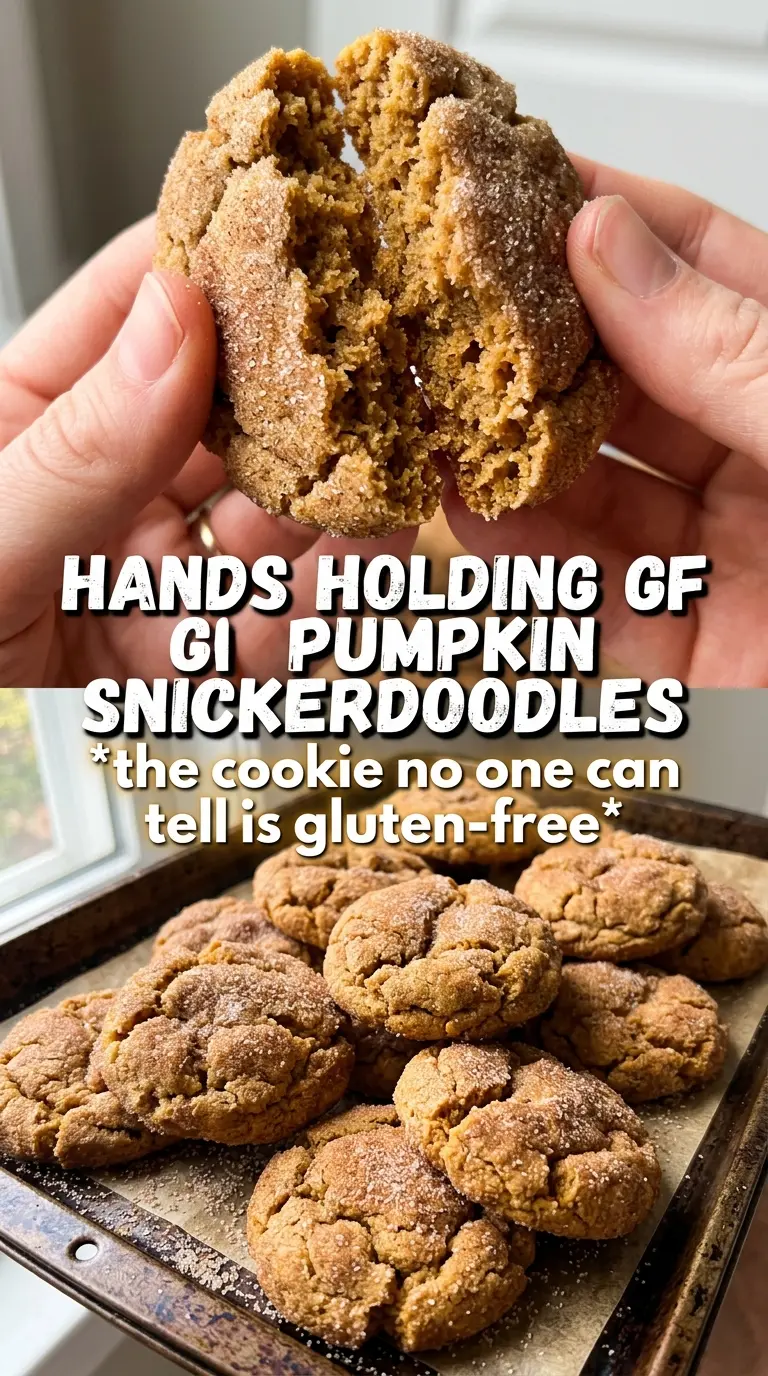
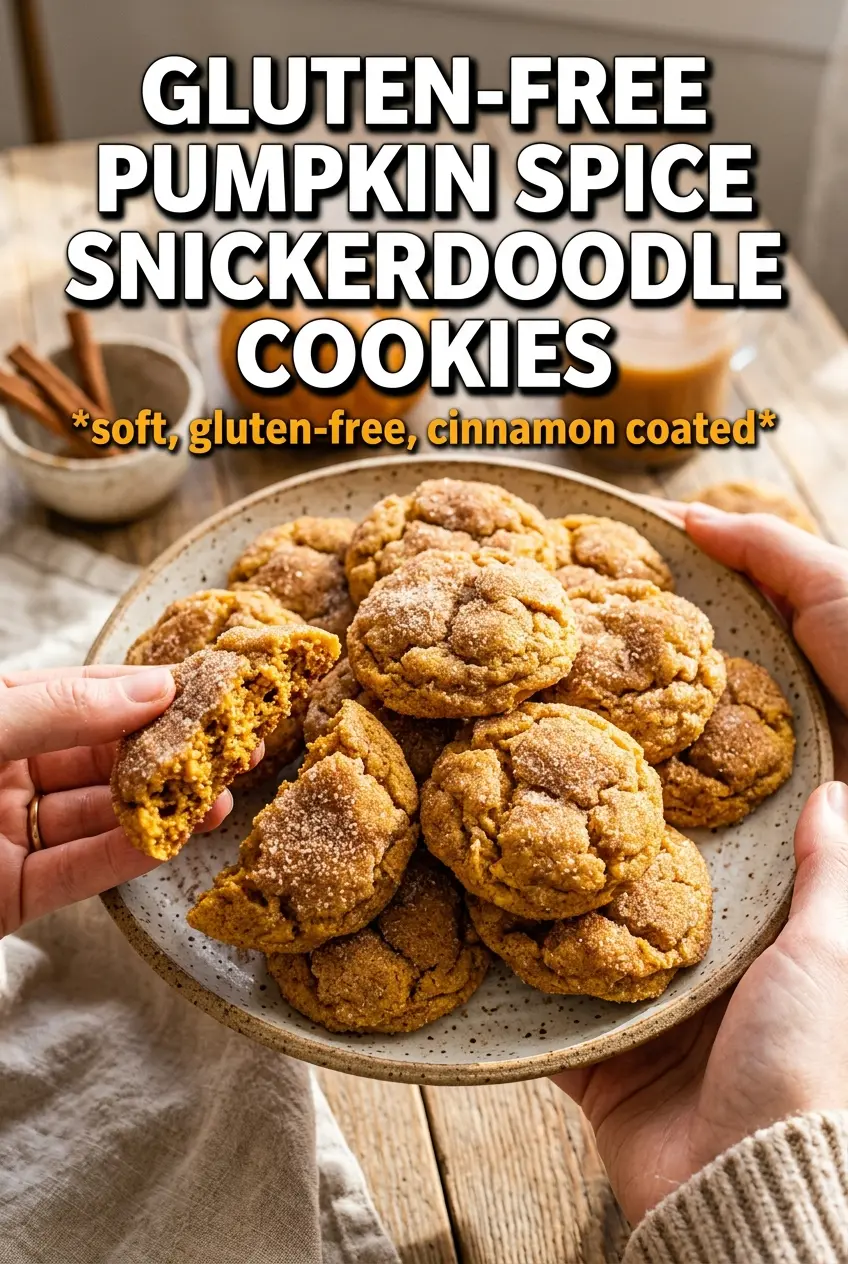
These gluten-free pumpkin spice snickerdoodle cookies bake up with the same crackly tops, soft centers, and cinnamon-sugar shell people love in a classic snickerdoodle, but with a warm pumpkin note that doesn’t turn them cakey. The texture stays tender in the middle and just set at the edges, which is exactly what you want from a cookie that still tastes like a cookie instead of a muffin in disguise.
The part that makes this version work is the way the pumpkin is handled. Pumpkin puree brings flavor and color, but it also brings water, and gluten-free dough is less forgiving when it gets too wet. Blotting the puree dry before it goes into the bowl keeps the dough thick enough to scoop cleanly and helps the cookies spread the right amount in the oven. The cream of tartar and baking soda also matter here, since they give these cookies that familiar snickerdoodle tang and lift without needing any fancy steps.
Below, I’ve included the detail that matters most for keeping these cookies soft instead of puffy, plus a few smart swaps and storage notes so you can bake them ahead without losing that fresh-from-the-oven texture.
The pumpkin flavor came through without making the cookies cakey, and the cinnamon-sugar coating baked into those perfect crinkly tops. My batch was done right at 11 minutes and stayed soft for days.
Like this recipe? Save these gluten-free pumpkin spice snickerdoodle cookies for the days when you want crinkly cinnamon-sugar cookies with a soft pumpkin center.
The Pumpkin Is What Usually Ruins the Texture Here
Most pumpkin snickerdoodles go wrong before they ever hit the oven. Pumpkin puree looks harmless, but even a small amount of extra moisture can push gluten-free dough from thick and scoopable into soft and sticky, which usually means cookies that puff up like cake and never get those sharp crinkles on top. Drying the pumpkin first changes the dough enough that the cookies spread in a controlled way and keep that classic snickerdoodle bite.
The other thing that matters is the balance between cream of tartar and baking soda. That combination gives the cookies lift and a slight tang, which is part of what makes a snickerdoodle taste like a snickerdoodle instead of a generic spice cookie. If you skip it or swap it out, you lose the texture and the flavor cue that makes these feel familiar.
- Blotted pumpkin puree — This is the difference between soft cookie dough and batter. Press the puree between paper towels until it feels thick and paste-like.
- Gluten-free all-purpose flour blend with xanthan gum — You need the structure here. A blend without xanthan gum usually spreads too much and bakes up sandy.
- Cream of tartar — It gives the gentle tang and helps the coating stay true to snickerdoodle style. There isn’t a perfect one-ingredient replacement.
What Each Ingredient Is Actually Doing in This Cookie
- Gluten-free all-purpose flour blend — Use a blend built for 1:1 baking and make sure it includes xanthan gum. That gives the cookies enough backbone to hold their shape without turning crumbly.
- Butter — Softened butter beats with the sugar into a fluffy base that helps the cookies spread just enough. Margarine changes the texture and gives you a flatter, less tender cookie.
- Pumpkin puree — Use plain pumpkin puree, not pumpkin pie filling. After blotting, it adds color and flavor without dumping excess water into the dough.
- Cinnamon, pumpkin pie spice, and nutmeg — These do more than flavor the dough. They carry through the sugar coating too, which is what gives each bite that warm finish.
- Egg — The egg binds the dough and keeps the center soft. I wouldn’t skip it in this recipe unless you’re testing a true egg-free version from scratch.
Getting the Dough Thick Enough to Roll and Bake Cleanly
Beat the butter until it’s genuinely fluffy
Start with butter that’s soft enough to press with a finger but not greasy or melting. Beat it with the sugar until it turns pale and looks airy, because that step traps tiny pockets of air that help the cookies rise and crackle later. If the butter is too cold, the mixture stays gritty; if it’s too warm, the cookies can spread too fast.
Add the pumpkin after it’s blotted dry
Mix in the egg, vanilla, and dried-off pumpkin puree next. The dough may look slightly softer than a classic snickerdoodle dough, but it should still scoop cleanly. If it looks glossy and loose, the pumpkin still holds too much water, and the cookies will bake up thick and cakey instead of crinkled.
Fold in the dry ingredients just until the flour disappears
Add the flour blend, cream of tartar, baking soda, cinnamon, pumpkin pie spice, nutmeg, and salt, then mix only until no dry streaks remain. Overmixing gluten-free dough can make the cookies dense and a little gummy. Once combined, scoop right away or chill briefly if the kitchen is warm.
Roll generously for the right finish
The cinnamon-sugar coating needs to look heavy on the dough balls before baking. That outside layer helps create the crackly shell as the cookies spread, and it gives you those caramelized edges that make the first bite worth it. Bake just until the tops are set and crinkled; if the centers still look a little soft, that’s correct.
How to Adapt These Cookies Without Losing the Snickerdoodle Feel
Dairy-Free Version
Use a solid plant-based butter stick made for baking, not a soft tub spread. The cookies will still brown and spread, though the flavor will be a little less rich and the centers may bake up a touch less tender.
Gluten-Free Blend Swap
Stick with a measured 1:1 blend that includes xanthan gum. If yours doesn’t, the cookies can break apart after baking, so you’d need to add the binder separately or choose a different flour blend altogether.
Extra Pumpkin Spice
Add a small extra pinch of pumpkin pie spice to the dough or the rolling sugar if you want a stronger spice finish. Don’t overdo it, because too much spice can crowd out the buttery cookie base and make the cinnamon coating taste bitter.
Make-Ahead Dough
Scoop the dough balls first, then roll them in the spice sugar right before baking. Chilled dough bakes a little thicker, which is helpful here, but the coating holds best when it stays dry until the last minute.
Storage and Reheating
- Refrigerator: Store in an airtight container for 4 to 5 days. The cookies stay soft, though the sugar coating softens a little after the first day.
- Freezer: Freeze baked cookies for up to 2 months, or freeze the scooped dough balls and roll them in sugar before baking. Dough freezes better than baked cookies if you want that fresh texture later.
- Reheating: Warm baked cookies for 5 to 8 seconds in the microwave or a few minutes in a low oven. Don’t overheat them, or the centers dry out before the edges soften.
Questions I Get Asked About This Recipe
Gluten-Free Pumpkin Spice Snickerdoodle Cookies
Ingredients
Equipment
Method
- Preheat oven to 375F and line baking sheets with parchment or silicone mats, so the cookies bake evenly right away.
- Beat butter and sugar until very fluffy, then add the egg, blotted pumpkin puree, and vanilla until smooth and combined.
- Fold in the gluten-free flour blend, cream of tartar, baking soda, cinnamon, pumpkin pie spice, nutmeg, and salt just until no dry streaks remain.
- Mix the rolling spices together in a shallow bowl with the sugar for an even cinnamon-sugar coating.
- Scoop dough into 1-1/2 tablespoon balls, then roll generously in the cinnamon spice sugar so each cookie is well coated.
- Bake for 10-12 minutes at 375F until the cookies look crinkled on top and are set at the edges, then transfer to a rack to cool.