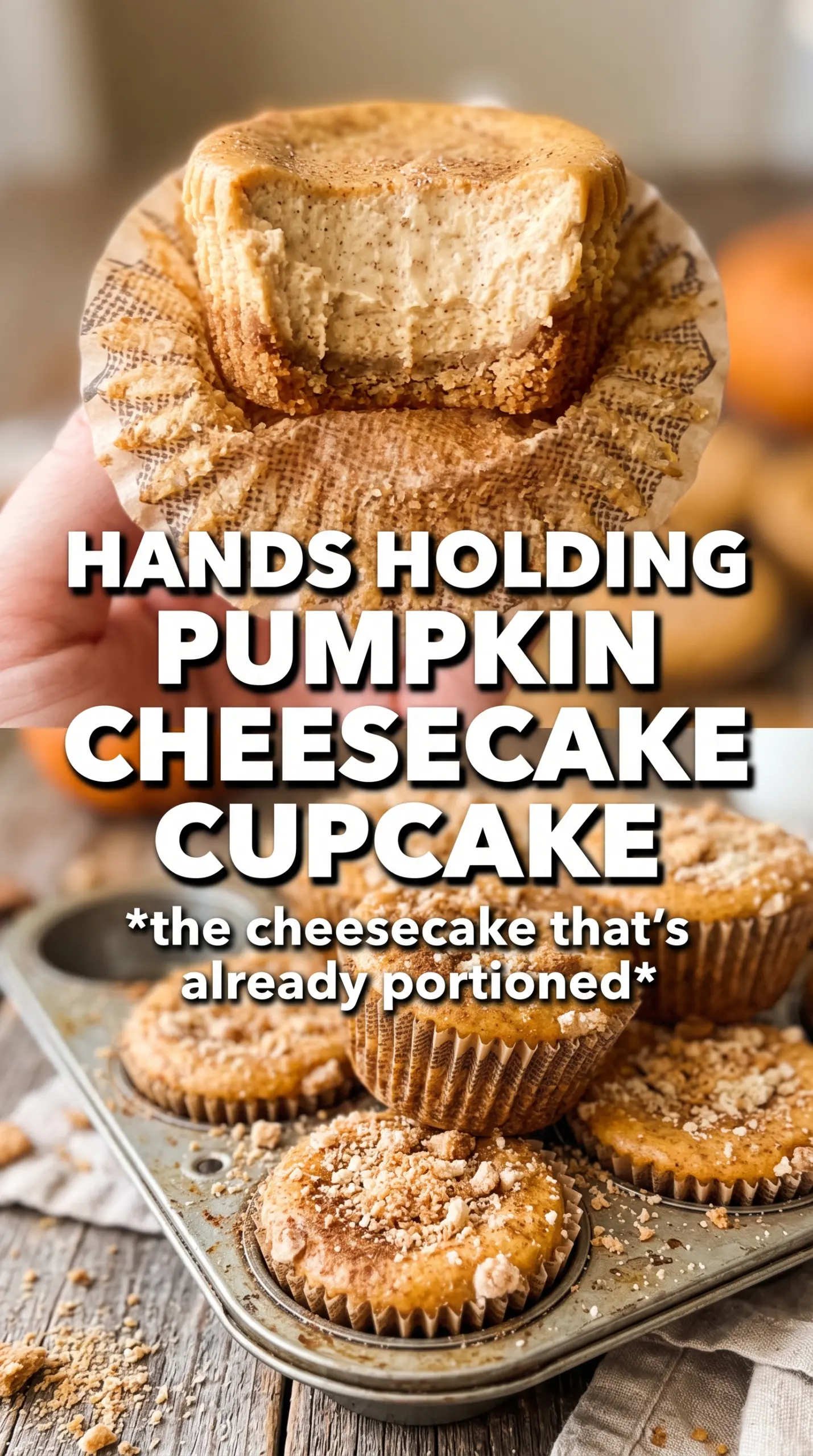
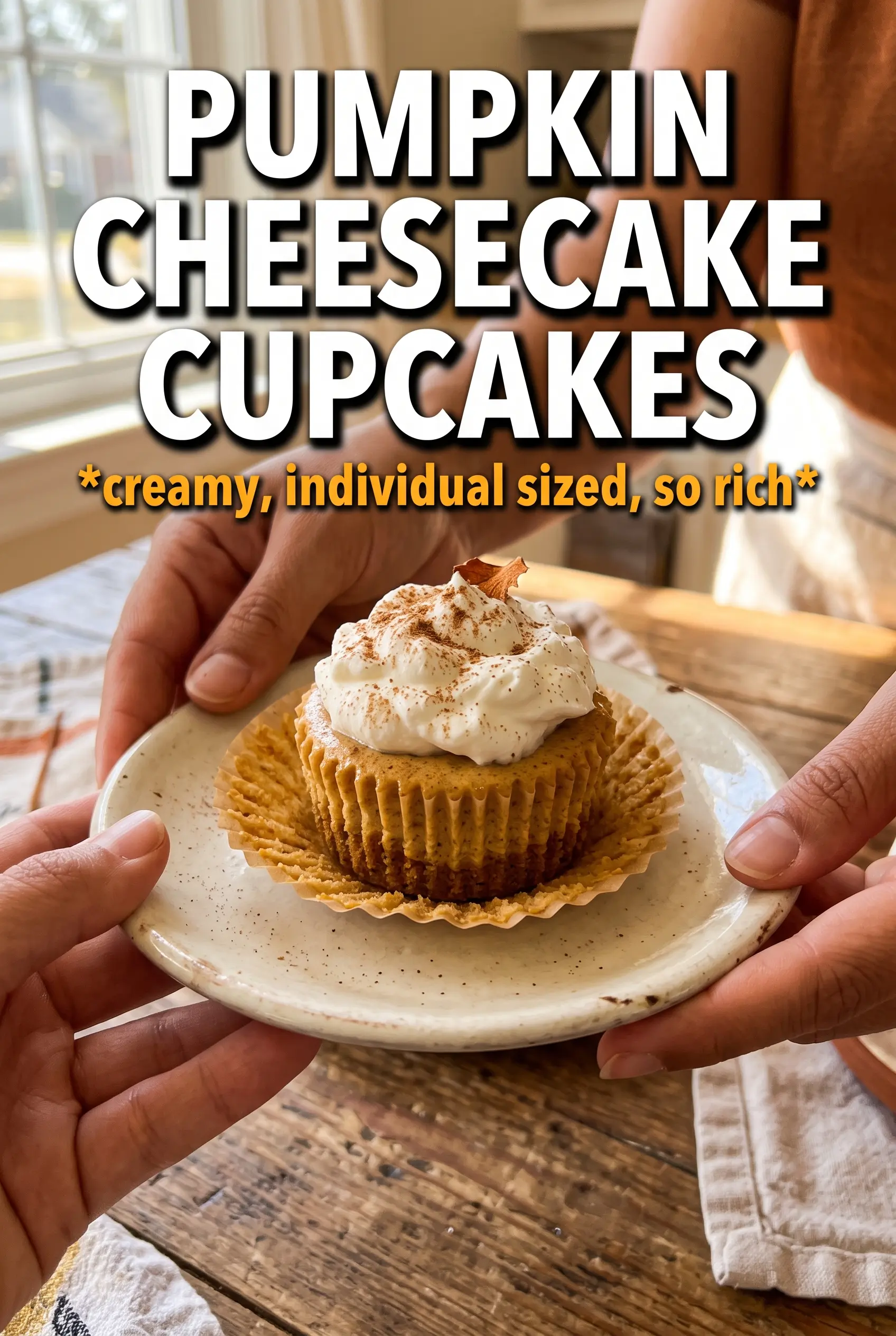
These pumpkin cheesecake cupcakes bake up with a buttery gingersnap crust, a smooth pumpkin filling, and just enough tang from the cream cheese to keep each bite from tasting heavy. The texture is what makes them stand out: creamy in the center, set at the edges, and finished with a cool swirl of whipped cream that plays nicely against the warm spice.
The crust matters here. Gingersnap crumbs give you more flavor than a plain graham crust, and pressing them firmly into the liners keeps the base from crumbling when you peel away the paper. The filling comes together best when the cream cheese is fully softened and the eggs go in one at a time, which keeps the batter silky instead of lumpy or overmixed. A short bake and a long chill do the rest.
Below you’ll find the small details that make these cupcakes behave like they should, plus a few ways to adapt them if you need a different crust or want to make them ahead for a party.
The centers baked up smooth and creamy, and after chilling they lifted right out of the liners without cracking. The gingersnap crust stayed crisp under the filling, which was exactly what I wanted.
Save these pumpkin cheesecake cupcakes for the holidays when you want a creamy dessert with a crisp gingersnap crust and a cinnamon finish.
The Small Mistake That Makes Cheesecake Cupcakes Crack
Most cheesecake cupcakes fail for the same reason: the batter gets beaten like cake batter, too much air gets whipped in, and the tops puff, split, or sink as they cool. These need a gentler hand once the eggs go in. Beat the cream cheese and sugar until smooth first, then mix just until the eggs disappear and the pumpkin mixture looks uniform. After that, stop. The batter should look satiny, not fluffy.
The other trap is overbaking. You are not waiting for the centers to look firm all the way through. Pull them when the edges are set and the middle still has a slight wobble. They finish setting in the pan and then firm up fully in the fridge. That chill time is part of the recipe, not an optional wait.
What Each Ingredient Is Actually Doing In These Cupcakes
- Gingersnap crumbs — These bring spice and a firmer, less sweet crust than graham crackers. If you swap them, you lose that sharp ginger note that cuts through the rich filling. Grahams work in a pinch, but add a pinch of extra cinnamon to keep the crust from tasting flat.
- Cream cheese — This is the backbone of the filling, and full-fat brick cream cheese gives the cleanest set and the smoothest texture. Tub-style cream cheese can be too soft and can bake up looser. Let it soften at room temperature so it blends without lumps, but don’t melt it.
- Pumpkin puree — Use pure pumpkin, not pumpkin pie filling. Pie filling already has sugar and spices mixed in, which throws off both flavor and texture here. If your puree looks watery, blot it briefly with paper towels so the filling doesn’t turn loose.
- Sour cream — This adds tang and keeps the filling from tasting dense. Plain Greek yogurt can work, but the flavor is a little sharper and the texture is slightly less plush. Use full-fat if you can.
- Whipped cream — The topping softens the spice and makes the cupcakes look finished without adding extra work. Add it only after the cupcakes are fully chilled, or it will melt into the surface.
Building the Crust, Filling, and Chill Time Without Breaking the Texture
Press the Crust Until It Stays Put
Mix the gingersnap crumbs, melted butter, and sugar until the crumbs look evenly moistened, then divide the mixture among the liners and press firmly. A spoon or small measuring cup works well for this because the base needs to be packed tight enough to hold together after baking. If the crust feels loose now, it will fall apart later when you peel off the paper. Bake the crust only long enough to set it before the filling goes in.
Mix the Filling in the Right Order
Beat the cream cheese and sugar first until there are no visible lumps. Add the eggs one at a time so the batter stays smooth, then stir in the pumpkin, sour cream, spices, and vanilla just until combined. If you keep mixing after the batter is uniform, you trap air and make the cupcakes more likely to crack. The finished batter should be thick, glossy, and pourable.
Bake Until the Center Still Shakes a Little
Fill each liner nearly full and bake until the edges look set and the centers wobble slightly when you nudge the pan. That wobble is what you want. If you wait until the middle looks fully firm, the cupcakes will overbake and turn grainy instead of creamy. Let them cool completely in the pan before moving them to the fridge, because warm cheesecake is fragile and can collapse if you rush it.
Chill Before Topping
Refrigerate the cupcakes for at least 3 hours so the filling can set properly. This is the part that gives you clean edges and that dense, chilled cheesecake texture. Add the whipped cream and cinnamon only after they’re cold all the way through. If you top them early, the cream softens and slides around instead of sitting tall.
Three Ways to Make These Work for Different Kitchens
Gluten-Free Crust Swap
Use certified gluten-free gingersnap cookies or gluten-free graham crackers and crush them fine. The texture stays the same as long as the crumbs are uniform and pressed firmly. You keep the same spicy crunch without changing the filling at all.
Dairy-Free Version
Use a dairy-free cream cheese that bakes well and swap the sour cream for a thick unsweetened dairy-free yogurt. The result will be a little softer and slightly less rich, but the pumpkin spice and gingersnap crust still carry the dessert. Skip the whipped cream or use a dairy-free whipped topping.
Make-Ahead for a Crowd
These are ideal for making the day before because the texture improves overnight. Bake, cool, and chill them without the topping, then add whipped cream just before serving. The crust stays crisp and the filling slices more cleanly after a long rest.
Less Sweet, More Tangy
Reduce the sugar in the filling by 2 tablespoons if you want a sharper cheesecake flavor. The cupcakes will taste a little less dessert-like and a little more like classic cheesecake, which works well if you’re serving them after a big meal. Don’t cut the sugar much further or the texture starts to feel flat.
Storage and Reheating
- Refrigerator: Store covered for up to 5 days. The crust softens a little over time, but the filling stays creamy.
- Freezer: These freeze well without the whipped cream. Wrap individually and freeze for up to 2 months, then thaw overnight in the refrigerator.
- Reheating: Don’t reheat these. Cheesecake cupcakes are meant to be served cold, and warming them breaks the texture and can make the filling greasy.
Answers to the Questions Worth Asking
Pumpkin Cheesecake Cupcakes
Ingredients
Equipment
Method
- Preheat the oven to 325F, then line a 18-cup muffin tin with paper liners.
- Combine the gingersnap crumbs, melted butter, and sugar, then press the mixture firmly into the bottom of each liner.
- Beat the cream cheese and granulated sugar until smooth, then add the eggs one at a time, mixing after each addition.
- Stir in the pumpkin puree, sour cream, pumpkin pie spice, cinnamon, and vanilla until evenly combined.
- Fill each liner nearly full with the pumpkin cheesecake batter.
- Bake for 20-22 minutes, until the centers are just set with a slight wobble, then cool completely.
- Refrigerate for 3 hours to firm up the cupcakes.
- Top each cupcake with whipped cream and dust with cinnamon, then serve chilled.