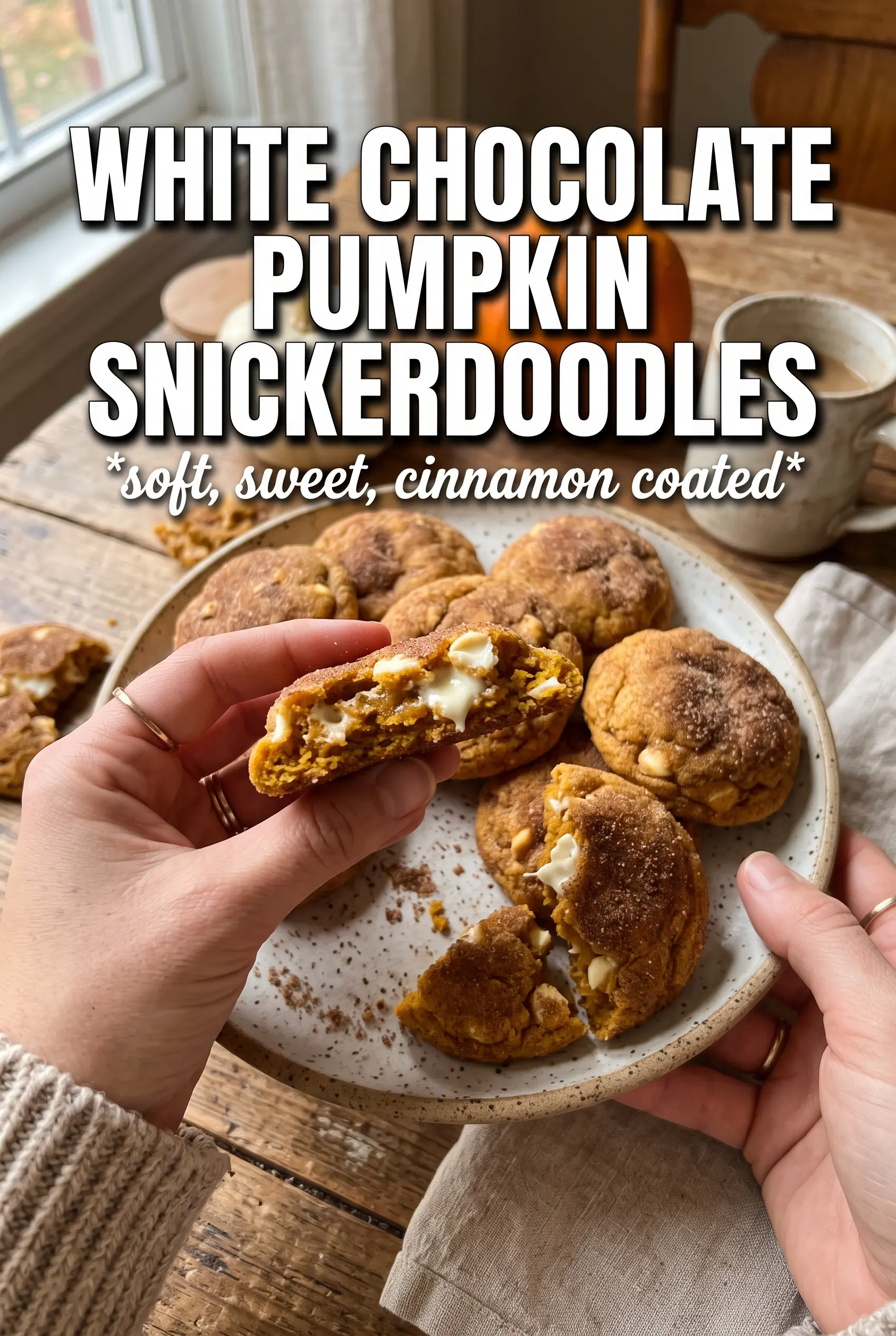
White chocolate pumpkin snickerdoodles bake up with crinkly tops, soft centers, and those little pockets of melted white chocolate that make the whole tray feel extra special. The pumpkin stays in the background just enough to keep the cookies tender and warmly spiced, while the cinnamon-sugar coating gives every bite that classic snickerdoodle crackle.
What makes this version work is restraint. The pumpkin puree gets blotted dry first, which keeps the dough from turning cakey and dull. Cream of tartar keeps the snickerdoodle tang and helps the cookies spread and crack the way they should, while the white chocolate chips bring a sweet creamy note that plays nicely against the spice instead of overpowering it.
Below, I’ll walk through the one prep step that keeps these cookies from going soft and puffy, plus a few smart swaps if you need to adjust for what’s in your pantry.
The cookies came out with that perfect crackly top and stayed soft in the middle even the next day. Blotting the pumpkin made a huge difference — mine didn’t spread into flat discs, and the white chocolate stayed creamy without making them too sweet.
Save these white chocolate pumpkin snickerdoodles for the cookie tray that needs crackly cinnamon sugar edges and soft pumpkin centers.
The Trick That Keeps Pumpkin Snickerdoodles From Baking Up Puffy
Pumpkin adds moisture, and moisture is the thing that pushes snickerdoodles toward cake territory. If the puree goes in straight from the can, the dough softens, the cookies puff, and you lose those crisp edges and crackly tops that make a snickerdoodle feel like a snickerdoodle. Blotting the pumpkin dry before it ever touches the bowl changes the texture more than any other step in the recipe.
The other piece that matters is the butter-sugar beat. You want the mixture fluffy and pale before the egg goes in, because that little bit of aeration helps the cookies spread just enough without collapsing into dense rounds. Once the flour goes in, stop mixing as soon as the dough comes together. Overmixing after the flour is added makes the cookies tougher and muddies the spice flavor.
- Cream of tartar — This gives snickerdoodles their signature tang and helps the tops crack in that familiar way. Baking powder won’t give you the same flavor or texture here.
- Blotted pumpkin puree — This is the difference between soft and cakey. Lay the puree on a paper towel and press gently until it feels thick, not wet.
- White chocolate chips — Use chips or chunks, but don’t go heavier than the recipe calls for. Too much white chocolate can make the cookies overly sweet and cause them to spread unevenly.
- Rolling sugar — The cinnamon-spice coating is what gives the cookies their finish, so don’t skip it. It should cling in a visible layer, not disappear into the dough.
What Each Ingredient Is Doing in These Cookies

- All-purpose flour — Gives the cookies enough structure to hold the pumpkin and chips without turning fragile. Spoon and level it if you can; too much flour makes the cookies dry and bready.
- Unsalted butter — Softened butter creams with the sugar for lift and texture. Salted butter works in a pinch, but cut back the added salt a little so the spice stays clean.
- Egg — Binds the dough and helps the centers stay tender. One egg is enough here; a second egg would push the texture toward cakey.
- Pumpkin puree — Adds moisture, color, and that gentle pumpkin flavor. The key is drying it first, because the recipe wants pumpkin character, not pumpkin water.
- Vanilla — Rounds out the spice and softens the sharper tang from the cream of tartar. It’s a small ingredient with a real job.
- White chocolate chips — Add creamy pockets that melt into the dough as the cookies bake. Chopped white chocolate works too and gives you more irregular, melty pieces.
Building the Dough So the Cookies Crackle, Not Collapse
Drying the Pumpkin First
Put the pumpkin puree between layers of paper towel and press out the extra moisture before anything else. The puree should look thicker and matte when you’re done, not glossy or wet. If you skip this, the dough turns sticky and the cookies rise into soft little domes instead of spreading into crinkled rounds.
Creaming the Butter and Sugar
Beat the butter and sugar until the mixture looks light, fluffy, and a shade paler than when you started. That air helps the cookies bake with lift, but you don’t want to whip it so long that the butter turns greasy. Once the egg, pumpkin, and vanilla go in, scrape the bowl well so the dough stays even from edge to edge.
Folding in the Flour and Chips
Add the dry ingredients and mix only until no streaks of flour remain. The dough will be soft but scoopable, and that’s exactly what you want. Fold in the white chocolate chips at the end so they stay intact; if you mix them too hard, they smear and the dough gets patchy.
Rolling and Baking for the Crinkled Finish
Scoop the dough into 1 1/2-tablespoon balls and roll them generously in the cinnamon-sugar mixture. Bake on lined sheets at 375°F until the edges are set and the tops have started to crack but the centers still look a little soft. Pull them early rather than late; these finish setting on the pan, and overbaking takes away the chewy middle.
How to Adapt These Pumpkin Snickerdoodles Without Losing the Texture
Dairy-Free Version
Use a plant-based butter that’s meant for baking and keep it at the same softened texture. The cookies will still spread and crack, though the flavor will be a little less rich and the edges may brown a touch faster.
Gluten-Free Swap
Use a 1:1 gluten-free baking flour that includes xanthan gum. The texture will be a little more delicate, but blotting the pumpkin and avoiding overmixing matter even more here, because gluten-free dough can go gummy fast.
Skip the White Chocolate
Leave out the chips for a more classic pumpkin snickerdoodle. You’ll lose the creamy pockets, but the spice and pumpkin become clearer and the cookies spread a little more cleanly.
Storage and Reheating
- Refrigerator: Store in an airtight container for up to 5 days. They stay soft, though the cinnamon sugar coating will soften a bit over time.
- Freezer: These freeze well baked or as dough balls. Freeze baked cookies in a single layer, then transfer to a container, or freeze rolled dough balls and bake from frozen with an extra 1 to 2 minutes.
- Reheating: Warm baked cookies in a 300°F oven for 3 to 4 minutes. The common mistake is using the microwave, which makes the centers gummy and dulls the crackly top.
Answers to the Questions Worth Asking
White Chocolate Pumpkin Snickerdoodles
Ingredients
Equipment
Method
- Preheat the oven to 375°F and line baking sheets. This ensures the trays are ready for immediate baking.
- Blot the pumpkin very dry. Remove excess moisture so the cookies spread less and stay tender.
- Whisk together the all-purpose flour, cream of tartar, baking soda, cinnamon, pumpkin pie spice, nutmeg, and salt. Mix until evenly speckled.
- Beat the unsalted butter and granulated sugar until very fluffy. Add air to help create snickerdoodle-style chew.
- Add the egg, pumpkin puree, and vanilla, then beat until combined. The dough should look thick and cohesive.
- Fold the flour mixture into the wet ingredients. Stop when no dry streaks remain.
- Fold in the white chocolate chips. Distribute the chips so they melt throughout.
- Roll the dough into 1-1/2 tablespoon balls, then coat in the cinnamon spice sugar made from granulated sugar, cinnamon, and pumpkin pie spice. Press lightly so the coating clings.
- Bake for 10-12 minutes at 375°F until the cookies are crinkled and the edges are set. Let them cool on the sheet briefly before serving.