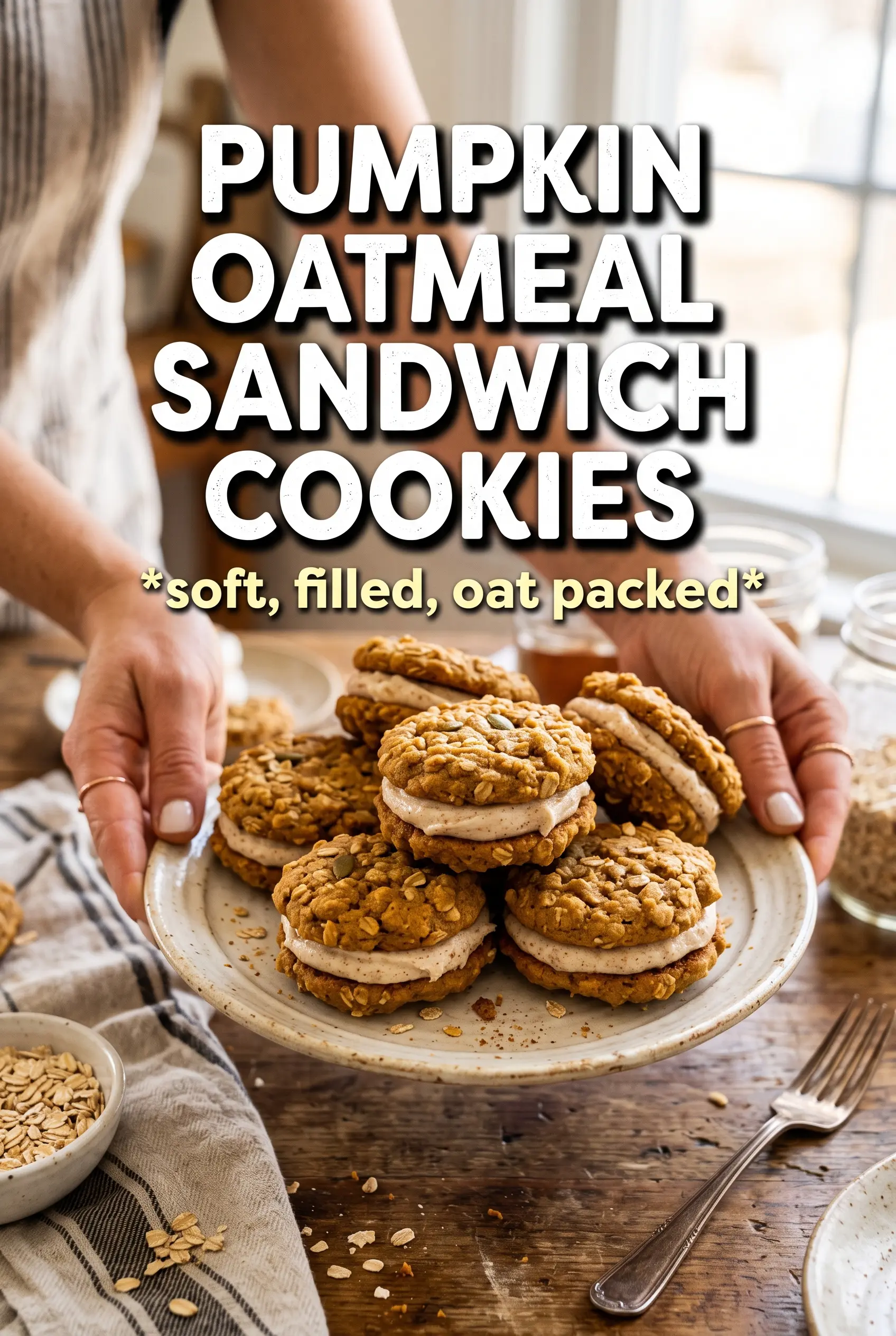
Pumpkin oatmeal sandwich cookies hit that sweet spot between nostalgic and bakery-worthy: soft in the center, lightly crisp at the edges, and packed with enough cinnamon warmth to make the cream cheese filling taste like it belongs there. The oats give the cookies a hearty chew, while the pumpkin keeps them tender without turning them cakey when the dough is handled the right way.
The trick is keeping the pumpkin under control. Even a little extra moisture can make the cookies spread too much and bake up gummy, so blotting it dry matters more than it sounds. The filling is built to be thick and fluffy, not runny, which means the cookies hold together when you bite into them instead of squishing out the middle.
Below, I’ll walk you through the one step that keeps the cookies from turning dense, plus the small filling adjustment that makes these taste like a proper sandwich cookie instead of two cookies stuck together.
The cookies stayed soft for days and the cinnamon cream cheese filling was thick enough that it didn’t ooze out when I pressed the sandwiches together. I blotted the pumpkin like you said, and that made a huge difference.
Save these pumpkin oatmeal sandwich cookies for the days when you want soft spiced cookies with a thick cinnamon cream cheese center.
The Pumpkin Moisture Problem Most Oatmeal Cookies Don’t Solve
Pumpkin sounds like it should make a cookie soft, but in practice it can push dough in the wrong direction fast. Too much moisture and the cookies spread, bake up pasty in the middle, or lose that oatmeal chew that makes them worth eating. Blotting the pumpkin dry is the step that keeps the dough behaving like cookie dough instead of batter.
The oats also need the right balance. Rolled oats give structure and texture; quick oats make the cookies softer and tighter, which changes the bite. If you want a sandwich cookie that feels substantial enough to hold the filling, stick with rolled oats and don’t overmix once they go in.
What the Pumpkin, Oats, and Filling Each Bring to the Table
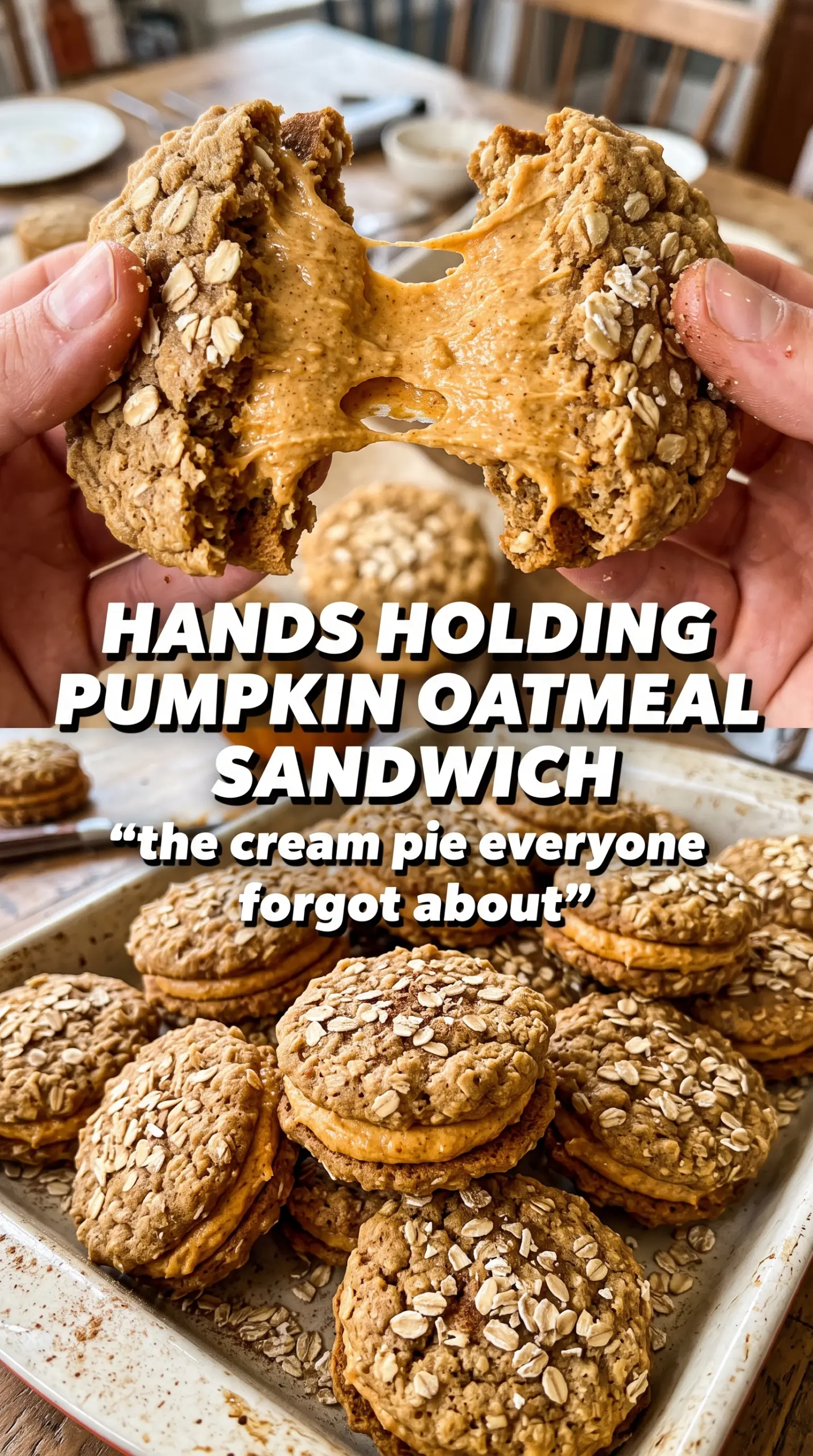
- Pumpkin — Use canned pumpkin puree, not pumpkin pie filling. The puree gives color and flavor without extra sugar or spices, and blotting it on paper towels removes enough water to keep the cookies from going cakey.
- Rolled oats — These give the cookies their chew and keep the texture open. Quick oats will work in a pinch, but they make the dough tighter and the finished cookies less hearty.
- Brown sugar — This does more than sweeten. It helps the cookies stay soft after baking and adds a deeper caramel note that plays well with the cinnamon filling.
- Cream cheese — Full-fat cream cheese gives the filling its tang and structure. Low-fat versions tend to loosen as they sit, which makes the sandwich layer less stable.
- Powdered sugar — This is what turns the filling from soft frosting into a pipeable, sandwichable cream. If you reduce it much, the filling gets too loose to stay put between the cookies.
How to Keep the Cookies Soft Without Turning the Filling Loose
Building the Cookie Dough
Beat the butter and brown sugar until the mixture looks light and fluffy, then add the blotted pumpkin, eggs, and vanilla. The pumpkin won’t fully blend at first, and that’s fine; it comes together once the dry ingredients go in. If the mixture looks broken or curdled, keep going rather than adding extra flour too early, because the oats and flour will smooth it out.
When you fold in the flour mixture and oats, stop as soon as the last streaks disappear. Overmixing here tightens the dough and makes the cookies dense instead of tender. Scoop rounded tablespoons and keep them fairly even so they bake at the same rate.
Baking for a Soft Center
Bake the cookies at 375°F just until the edges are set and the centers no longer look wet. They may still feel soft when you pull them from the oven, and that’s what you want. If you wait until they look completely done in the center, they’ll end up dry after cooling.
Let them cool completely before filling. Warm cookies melt the cream cheese mixture and cause the sandwich layer to slide, which is the fastest way to lose that clean, stacked look.
Whipping the Filling and Assembling
Beat the cream cheese, butter, powdered sugar, cinnamon, vanilla, and nutmeg until the filling looks smooth and holds soft peaks. If it seems loose, give it another minute of mixing before adding more sugar; a properly whipped filling often firms up as the powdered sugar fully hydrates. Match the cookies by size, then add a generous spoonful of filling to one half and press gently until it spreads to the edges.
Don’t overfill. You want enough that it looks generous when you bite in, but not so much that it squeezes out in every direction. A little filling peeking out is perfect; a mess on the plate usually means the cookies were still warm or the filling was too soft.
Three Ways to Make These Work for Different Kitchens
Dairy-Free Version
Use a plant-based butter in both the cookies and filling, then swap in a dairy-free cream cheese that’s designed for baking or spreading. The cookies will still be soft and spiced, but the filling may be a little less tangy and slightly softer, so chill the sandwiches before serving.
Gluten-Free Adaptation
Replace the flour with a 1:1 gluten-free baking blend that includes xanthan gum. The oats still give the cookies plenty of structure, but the blend keeps the dough from crumbling and helps the sandwich cookies hold together after baking.
More Spice, Less Sweet
Add an extra 1/2 teaspoon cinnamon to the filling and cut the powdered sugar by about 1/4 cup if you want the spice to lead. The filling will be a little less lofty, but the pumpkin cookie flavor comes through more clearly.
Make-Ahead Storage
Store the assembled cookies in an airtight container with parchment between layers. Refrigeration keeps the filling firm and the cookies soft for up to 4 days, and they freeze well for about 1 month if wrapped tightly. For the best texture, let refrigerated cookies sit at room temperature for 15 to 20 minutes before serving; if you eat them cold, the filling will taste firmer and the cookies less aromatic.