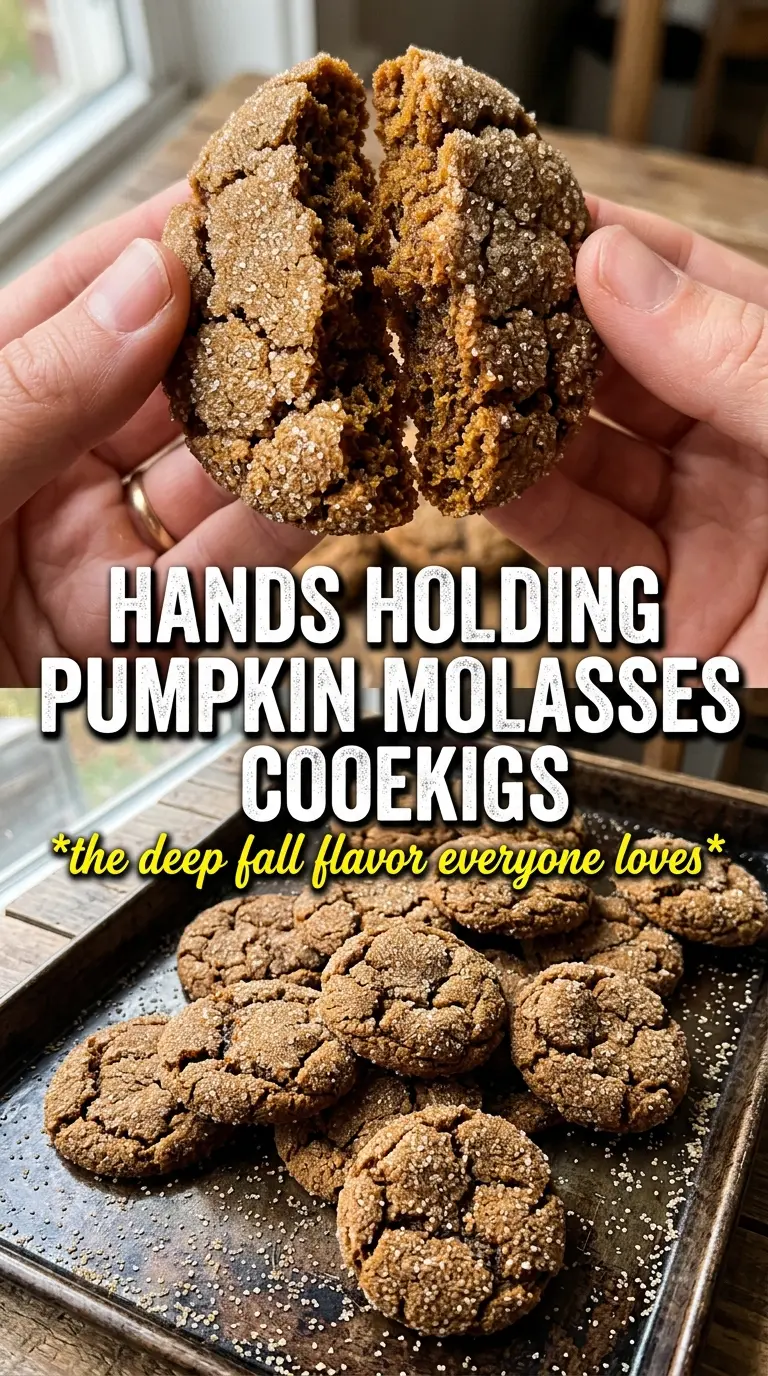
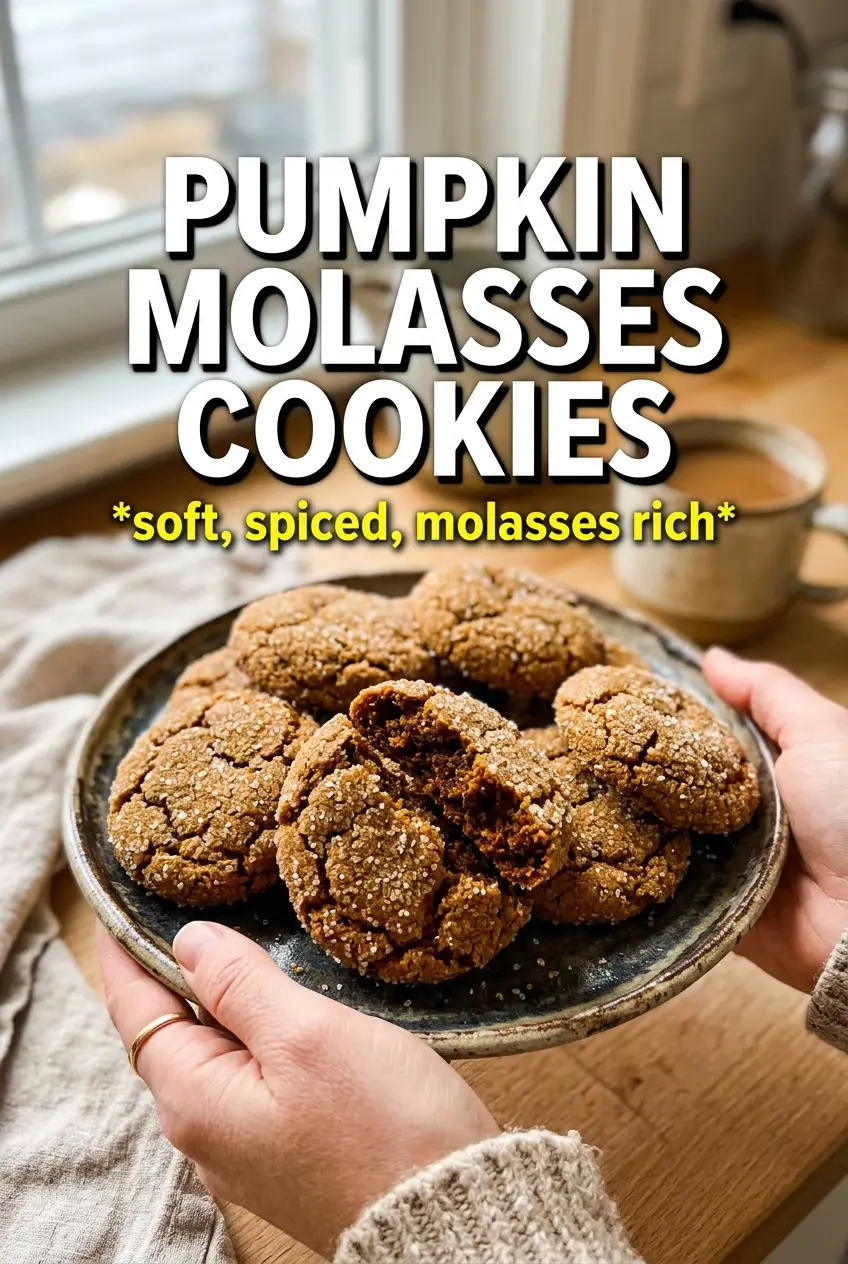
Pumpkin molasses cookies bake up with a crackly sugar shell, chewy middle, and that deep brown spice flavor that makes people reach for a second one before the first has even cooled. The pumpkin brings softness and a little moisture, but the molasses is what gives these cookies their dark color and that old-fashioned, almost gingerbread-like bite. Rolled in sugar before baking, they spread into thick, crinkled rounds with crisp edges and a tender center.
The trick here is using just enough pumpkin to add flavor without turning the dough cakey, and blotting it dry so it doesn’t throw off the texture. Molasses and brown sugar do the heavy lifting for flavor and chew, while the baking soda helps the cookies puff and crack as they bake. A short chill keeps the dough easy to scoop and helps the cookies hold their shape instead of flattening too fast.
Below you’ll find the exact cues I watch for in the oven, plus a few swaps that still keep the cookies chewy and spiced. If you’ve had pumpkin cookies turn soft and puffy instead of crisp-edged and crinkled, the notes here will save you a batch.
The cookies came out with those perfect crackly tops and a soft center that stayed chewy for days. Blotting the pumpkin made a huge difference — mine didn’t spread too much and the molasses flavor came through beautifully.
Like these pumpkin molasses cookies? Save them to Pinterest for thick, chewy cookies with crisp edges and deep spice flavor.
The Reason These Cookies Stay Chewy Instead of Turning Cakey
Most pumpkin cookies go wrong because the dough carries too much moisture. Pumpkin puree sounds harmless, but even a few extra spoonfuls can push a cookie toward puffy and bread-like instead of dense and chewy. Blotting the pumpkin dry before it goes into the bowl fixes a lot of that problem before it starts.
The other thing that matters is the balance of sugar and spice. Brown sugar and molasses hold onto moisture and give these cookies their chew, while cinnamon, ginger, cloves, allspice, and a little black pepper make the flavor taste deeper than a standard pumpkin cookie. The pepper doesn’t make them hot; it sharpens the spice and keeps the cookie from tasting flat.
- Blotted pumpkin puree — This is what keeps the dough from getting loose. A paper towel or clean kitchen towel works; press out as much moisture as you can without making the pumpkin watery.
- Molasses — Use unsulphured molasses for the best flavor. Blackstrap is too bitter here and can take over the cookie.
- Brown sugar — It adds moisture and chew that white sugar can’t fully replace. Dark brown sugar will give you a deeper caramel note if that’s what you like.
- Baking soda — It gives the cookies that crackly top and helps them spread in a controlled way. Baking powder won’t do the same job here.
What Each Ingredient Is Actually Doing in the Dough
- All-purpose flour — This gives the cookies enough structure to hold their thick centers. Measuring it correctly matters more than fancy flour here; too much and the cookies turn dry.
- Cinnamon, ginger, cloves, allspice, and black pepper — This is the spice backbone. Ginger and cinnamon lead, cloves and allspice round everything out, and the pepper keeps the sweetness from feeling heavy.
- Butter — Softened butter creams with the sugar to trap air and help the cookies bake up tender. If the butter is melted, the dough will spread too fast.
- Egg — It binds the dough and helps the cookies set in the oven. One egg is enough; adding another would push the texture toward cakey.
- Vanilla — It softens the molasses edge and ties the spices together. It won’t stand out on its own, but you’d notice if it were missing.
- Granulated sugar for rolling — This builds the sparkly crust and gives the surface those little baked cracks. Don’t skip it if you want the classic look and texture.
Building the Dough So the Cookies Crinkle Instead of Spread
Dry the Pumpkin First
Press the pumpkin puree between paper towels until it looks almost paste-like. You don’t need to remove every trace of moisture, but the drier it is, the less likely the cookies are to bake up soft and puffy. This is the one step that changes the whole texture of the batch.
Cream the Butter and Sugar Until It Lightens
Beat the softened butter and brown sugar until the mixture looks fluffy and a shade lighter. That aeration helps the cookies bake with a little lift before the edges set. If the butter is too cold, the mixture stays gritty; if it’s too soft, the dough turns loose.
Mix Just Until the Flour Disappears
Once the dry ingredients go in, stop mixing as soon as no flour streaks remain. Overmixing develops too much structure and makes the cookies tough instead of tender. The dough will be soft but scoopable after a 30-minute chill.
Watch for the Crinkle, Not the Clock
Bake the cookies until the tops have cracked and the edges look set, but the centers still look a little underdone. They finish on the baking sheet as they cool, and that carryover heat is what keeps them chewy. If you wait until they look fully baked in the oven, you’ll lose the soft center.
How to Adapt These Cookies Without Losing the Chewy Center
Gluten-Free Swap
Use a 1:1 gluten-free baking blend with xanthan gum already included. The cookies will still be chewy, but the edges may be a little more delicate, so let them cool on the pan for a few minutes before moving them.
Dairy-Free Version
Swap the butter for a plant-based baking stick, not a tub spread. Baking sticks behave much more like regular butter and keep the dough from spreading too much.
Extra-Spiced Batch
Add another 1/4 teaspoon of ginger if you want a sharper bite, or a pinch more black pepper for a warmer finish. Don’t increase the molasses at the same time or the cookies can lose their balance and bake up too soft.
Storage and Reheating
- Refrigerator: Store in an airtight container for up to 5 days. They stay chewy, though the sugar coating softens a bit after the first day.
- Freezer: Freeze baked cookies for up to 2 months, or freeze scooped dough balls rolled in sugar and bake straight from frozen with an extra minute or two.
- Reheating: Warm a cookie for 5 to 8 seconds in the microwave if you want the center softer. Don't overheat them or the sugar coating can get sticky and the cookie will dry out.
Answers to the Questions Worth Asking
Pumpkin Molasses Cookies
Ingredients
Equipment
Method
- Preheat the oven to 375F and line baking sheets with parchment paper or liners.
- Blot the pumpkin puree very dry, then whisk together the all-purpose flour, baking soda, cinnamon, ginger, cloves, allspice, black pepper, and salt.
- Beat the softened unsalted butter and brown sugar until smooth, then add the egg, molasses, blotted pumpkin puree, and vanilla.
- Fold in the flour mixture just until combined.
- Refrigerate the dough for 30 minutes.
- Scoop the dough into 1-1/2 tablespoon balls, then roll each ball in granulated sugar and place on the prepared sheets.
- Bake for 9–11 minutes at 375F until crinkled around the edges, using the visual cue of set centers and dark crinkles, and do not overbake.