Zucchini rollatini lands on the table looking like a little celebration: tender ribbons of zucchini wrapped around a creamy three-cheese filling, tucked into marinara, then baked until the edges turn golden and the top bubbles in all the right places. The best bites hold their shape just enough to cut cleanly, but the center stays soft and rich. It feels substantial without being heavy, which is exactly why this one keeps coming back into dinner rotation.
The part that makes this version work is moisture control. Zucchini carries a lot of water, and if you skip the salting and drying, the rolls can slip apart and the sauce turns thin. A quick pre-cook on a grill pan or in the oven gives the planks enough flexibility to roll without cracking, and the egg in the filling helps the ricotta set instead of spilling out.
Below, I’ve laid out the little details that matter most, from getting the zucchini soft enough to roll to choosing the right kind of marinara so the dish stays bright and savory instead of watery.
The zucchini stayed tender without turning mushy, and the filling set up beautifully after resting. I loved that the marinara didn’t water everything down.
Save these zucchini rollatini for the nights when you want bubbling marinara, a creamy three-cheese filling, and a baked vegetarian main that slices cleanly.
The Part That Keeps Zucchini Rollatini From Turning Watery
The biggest mistake with zucchini rollatini is treating the zucchini like it behaves the same way as pasta. It doesn’t. Zucchini needs to lose some water before it goes into the pan, or the filling turns loose and the sauce underneath gets diluted. Salting the planks first pulls out surface moisture, and patting them dry after resting is not optional if you want rolls that stay neat.
The second thing that matters is softening the planks just enough to roll without snapping them. A quick pass on a grill pan or a short bake does that job without cooking the zucchini all the way through. If the strips are limp and floppy before they ever hit the oven, they’ll collapse in the baking dish and the filling will squeeze out instead of staying tucked inside.
- Salting the zucchini — This draws out water before baking, which is the difference between a neat casserole and a soupy one.
- Pre-cooking the planks — You want them flexible, not fully tender. That small head start keeps the rollatini intact in the oven.
- Resting after baking — The filling firms up as it cools slightly, so the rolls cut cleaner after a 10-minute rest.
What Each Ingredient Is Actually Doing In This Dish
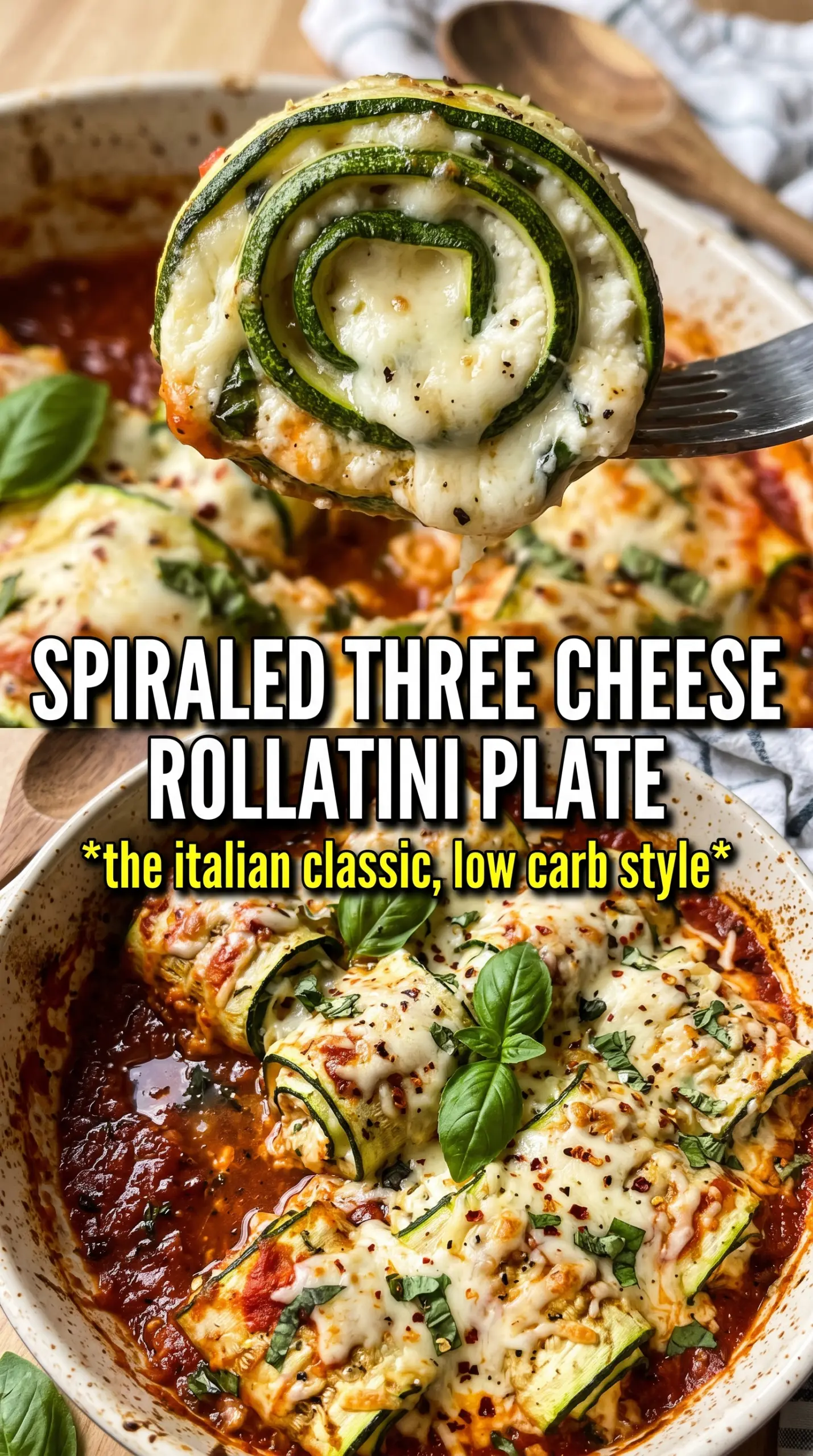
- Zucchini — These are the structure of the dish. Choose large, firm zucchini with straight sides so you can slice even planks that roll without fighting you. A mandoline helps a lot here because consistency matters more than speed.
- Ricotta — This is the creamy base of the filling. Whole-milk ricotta gives the richest texture, but part-skim works if it’s the only one you have. If your ricotta seems wet, drain it briefly in a fine-mesh strainer so the filling doesn’t loosen.
- Mozzarella — Some goes into the filling for stretch, and some goes on top for that browned, bubbling finish. Shredded low-moisture mozzarella melts more predictably than fresh mozzarella here.
- Parmesan — This sharpens the filling and keeps it from tasting flat. The grated kind works best because it disappears into the ricotta and seasons the whole mixture.
- Egg — It binds the cheeses so the filling sets instead of oozing out when you cut into the rolls. Skip it only if you’re serving immediately and don’t mind a softer center.
- Marinara — Use one that tastes good on its own, because it sets the tone for the whole dish. A thick sauce works best; thin sauce can run under the rolls and make them slide around.
Assembling The Rolls So They Hold Together In The Oven
Drying and Softening the Zucchini
After salting the zucchini planks, let them sit long enough for beads of moisture to form on the surface, then pat them dry with real pressure. That step keeps the filling from slipping once the rolls are baked. A quick grill-pan sear or a short bake at 400°F softens the planks just enough so they bend without cracking, but pull them before they collapse. If the zucchini is too soft at this stage, the rolls can tear when you try to fill them.
Mixing the Filling
Stir the ricotta, mozzarella, parmesan, egg, herbs, garlic, salt, and pepper until the mixture looks fully combined and thick, not glossy and loose. The filling should scoop cleanly from a spoon and hold its shape for a second before settling. If it looks wet, the zucchini will release more moisture into the dish and everything will loosen in the oven. Cold ricotta can make the mixture uneven, so let it sit at room temperature for a few minutes before mixing if needed.
Filling and Nestling the Rolls
Spread a thin layer of marinara in the baking dish first so the bottoms don’t stick and the rolls stay saucy underneath. Lay each plank flat, add the filling near one end, and roll it snugly without squeezing hard enough to force the cheese out the sides. Set each roll seam-side down so it anchors itself while baking. If the rolls keep unfolding, they were overfilled or the zucchini was cut too thin.
Baking Until Bubbling and Set
Spoon the remaining marinara over the top, add the mozzarella, and bake until the sauce is bubbling at the edges and the cheese has melted into golden spots. The center should be hot and the filling should look set when you nudge a roll with a spoon. Pull the dish from the oven and let it rest for 10 minutes before serving. That rest matters because the filling finishes tightening and the sauce settles back into the dish instead of spilling out on the plate.
How To Adapt These Rollatini Without Losing The Good Part
Dairy-Free Version
Use a dairy-free ricotta and mozzarella that melt well, then add a little extra salt and basil to bring the filling back into balance. The texture will be a touch softer than the original, but the rolls still bake up neatly if you keep the zucchini well dried.
Gluten-Free As Written
This recipe is naturally gluten-free as long as your marinara is, too. Check the label on the sauce, since some brands sneak in thickeners or pasta-related additives that don’t belong here.
Make It Heartier
Add a layer of sautéed spinach or chopped mushrooms to the filling if you want more body in the dish. Cook the vegetables first and let them cool, or they’ll dump extra moisture into the cheese mixture and undo the work you did with the zucchini.
Storage and Reheating
- Refrigerator: Store leftovers covered for up to 4 days. The zucchini softens a bit more as it sits, but the flavor holds up well.
- Freezer: Freezing works, though the zucchini will be softer after thawing. Wrap portions tightly and freeze for up to 2 months for the best texture.
- Reheating: Warm covered in a 350°F oven until hot in the center. The microwave works in a pinch, but it can make the zucchini watery, so use short bursts if that’s the route you take.
Answers to the Questions Worth Asking
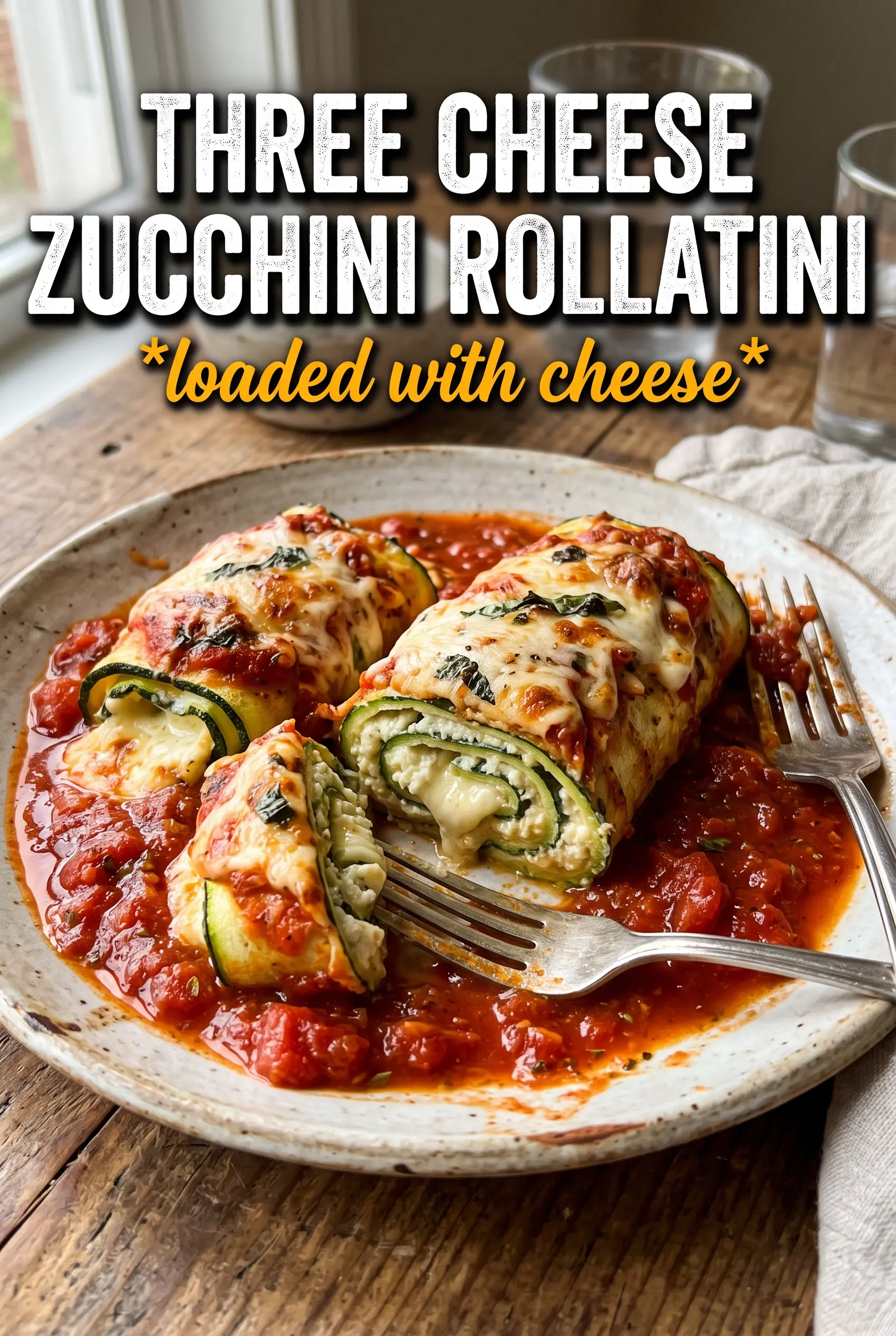
Three Cheese Zucchini Rollatini
Ingredients
Equipment
Method
- Salt the zucchini planks and let sit for 15 minutes, then pat completely dry so they don’t steam in the oven.
- Grill the planks on a grill pan or bake at 400°F for 8 minutes to soften slightly and remove moisture, then cool.
- Preheat the oven to 375°F.
- Mix the filling ingredients—ricotta, 1 cup mozzarella, parmesan, egg, basil, parsley, garlic, salt, and pepper—until well combined.
- Spread 1 cup marinara on the bottom of a 9x13 baking dish.
- Lay each zucchini plank flat, add a spoonful of three-cheese filling along one end, and roll tightly.
- Place the rolls seam-side down in the baking dish.
- Spoon the remaining marinara over the rolls and top with shredded mozzarella.
- Bake 28–35 minutes at 375°F until the cheese is melted, golden, and bubbling.
- Rest for 10 minutes, then garnish with extra parmesan and basil before serving.