Fireworks cupcakes are all about the moment you lift the fork and get that tall swirl of soft vanilla buttercream with a little crunch from the sprinkles on top. They look festive enough for a party table, but the best part is how straightforward they are to pull off once you know the frosting trick. The color lands in bold stripes, the frosting holds its peak, and the whole thing reads like a celebration before the first bite.
The key is starting with a sturdy cupcake base and letting it cool completely before you pipe anything on top. Warm cupcakes will melt the buttercream and blur the colors fast. The frosting itself needs a long whip after the sugar goes in; that extra minute or two turns it from heavy and grainy into something light enough to swirl high without collapsing. A large star tip helps the three-color effect show up clearly, and gel coloring keeps the frosting thick instead of runny.
Below, you’ll find the small details that make these cupcakes easier to decorate neatly, plus a few ways to adapt them for different crowds and shortcuts without losing the firework look.
The buttercream held those tall swirls perfectly, and the red, white, and blue stripes came through even after I added the sprinkles. My kids thought the sparkler picks were the coolest part.
Save these Fireworks Cupcakes for the party dessert that looks dramatic but comes together with boxed cake mix and a fast vanilla buttercream swirl.
Why the Swirl Stays Tall Instead of Melting Into a Mess
These cupcakes only look fussy because the decoration has a lot of movement; the method itself is straightforward. The biggest mistake is frosting cupcakes before they’re fully cool. Even a little warmth softens the buttercream enough to make the colors bleed, and then the star tip loses the ridges that give the swirl its height.
The other thing that matters is the buttercream texture. If it’s too stiff, the colors won’t pipe cleanly together. If it’s too loose, the swirl slumps. Beat it until it looks airy and pale, then stop once it holds soft peaks and still spreads easily with a spatula.
What Each Ingredient Is Actually Doing in These Cupcakes
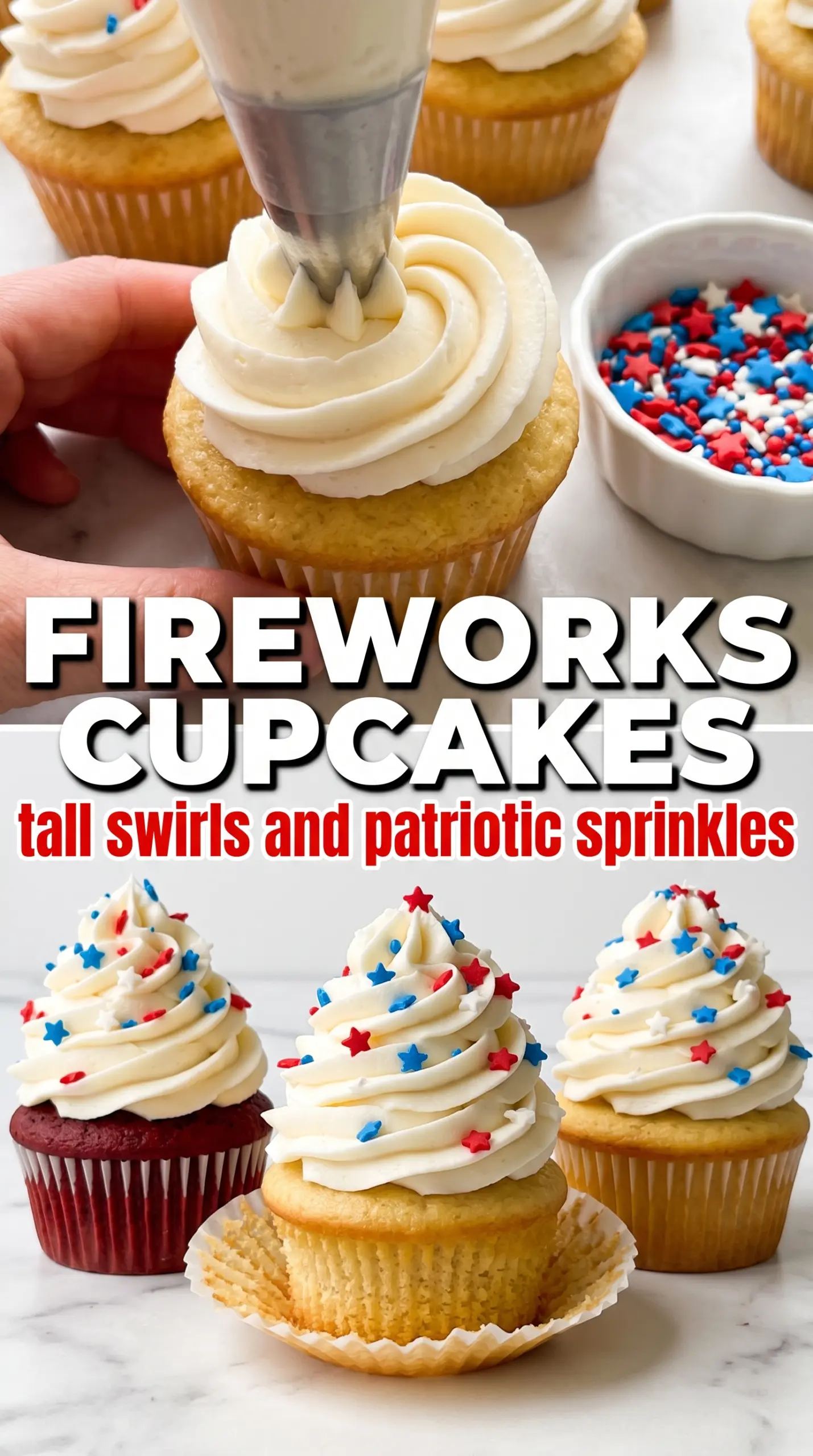
- White or vanilla cake mix — This gives you a reliable, tender cupcake base without building the batter from scratch. A boxed mix is the one shortcut that works beautifully here because the decoration is the star. Use vanilla if you want the crumb to stay light and let the frosting colors stand out.
- Unsalted butter — Softened butter is what gives the buttercream its structure and that rich, creamy mouthfeel. Salted butter works in a pinch, but unsalted keeps the frosting cleaner tasting and easier to balance. If the butter is too cold, you’ll get tiny lumps that don’t whip out.
- Powdered sugar — This sweetens and thickens the frosting at the same time. Don’t swap in granulated sugar; it won’t dissolve the same way and the texture turns gritty. Add it gradually so it doesn’t puff everywhere and so the frosting stays smooth.
- Heavy cream — Cream loosens the frosting just enough to pipe tall swirls. Milk can work, but the buttercream will be a touch softer. Add it slowly, because a tablespoon too much can turn a pipeable frosting into one that slides off the cupcake.
- Gel food coloring — Gel coloring gives you bold red and blue without thinning the buttercream. Liquid food coloring can make the frosting wet and dull. Start with a tiny amount and build the color, since red and blue deepen after a minute or two.
- Star sprinkles and sparkler picks — The sprinkles add the firework look without much effort, and the picks make the cupcakes read instantly as a celebration dessert. Add the sprinkles right after piping so they stick before the frosting sets. Save the sparkler picks for serving and follow the package instructions carefully.
Building the Frosting Swirl So the Colors Stay Clean
Whipping the Base
Beat the softened butter until it looks pale and fluffy before anything else goes in. That first whip builds the air that helps the frosting hold height. Once the powdered sugar starts adding bulk, keep mixing until the texture turns light instead of dense and greasy. If the buttercream looks oily or separated, it usually needs another full minute of whipping.
Dividing and Coloring
Split the frosting into three portions before adding color so each shade stays distinct. Leave one white, tint one red, and tint one blue with gel coloring, stirring each portion until the color is even. Go slowly with the red because it deepens fast and can overpower the other two colors if you overdo it.
Piping the Firework Peak
Load the piping bag with the three colors side by side, not mixed together, so the stripes show up in the finished swirl. Hold the tip straight over the center of each cupcake and pipe from the outside in, building upward in one steady motion. If you stop and restart in the middle, the swirl can look broken instead of tall and smooth. Finish with a small flick at the top for that sharp peak.
Decorating at the Last Minute
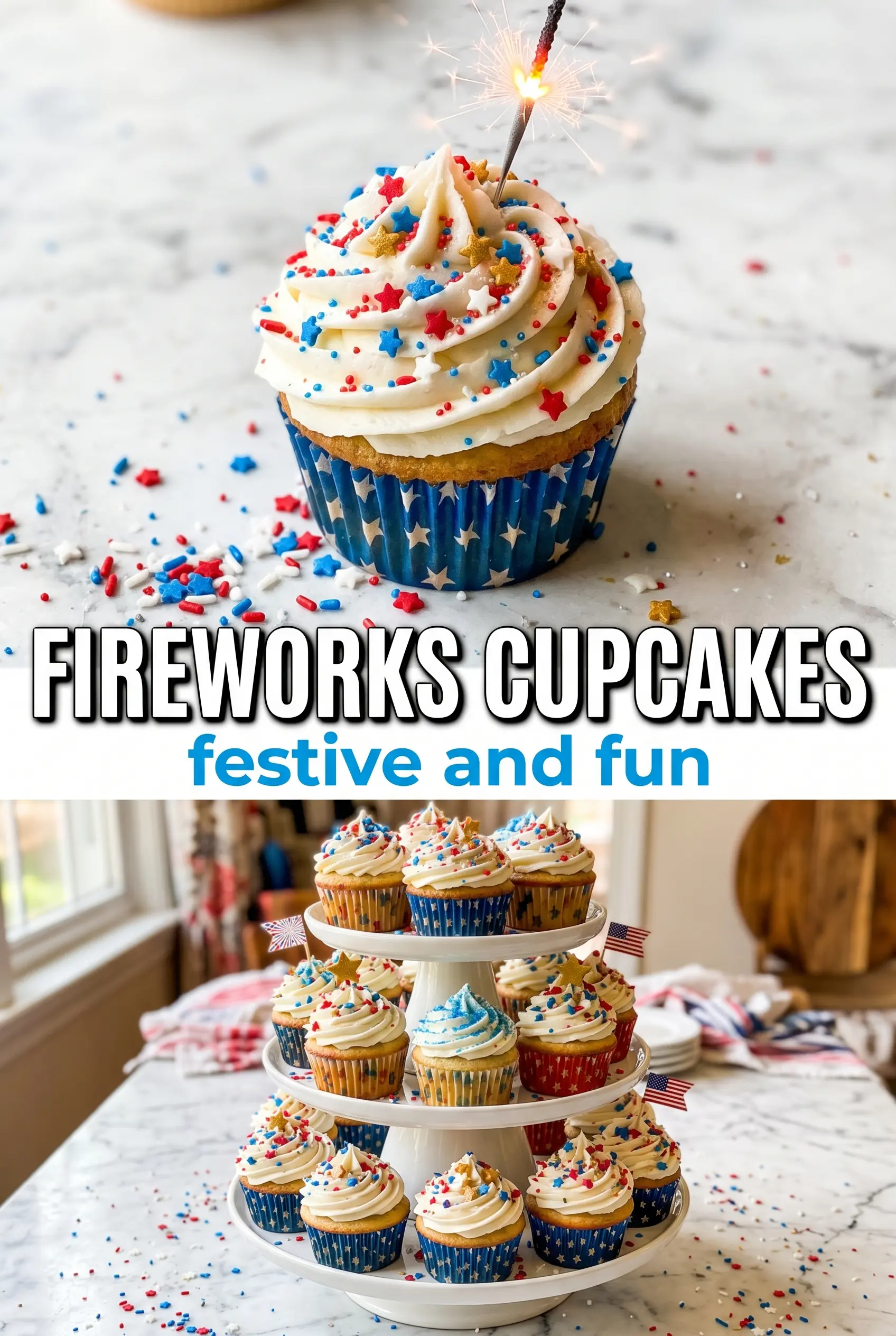
Shower the frosting with star sprinkles right away while the surface is still tacky. Then insert the sparkler pick gently into the center, not all the way to the bottom, so the cupcake doesn’t crack or lean. Serve them soon after decorating so the colors stay bright and the frosting keeps its crisp edges.
How to Adapt Fireworks Cupcakes for Different Crowds
Dairy-Free Buttercream
Use a plant-based butter that’s meant for baking and swap the heavy cream for unsweetened non-dairy milk, adding it a teaspoon at a time. The frosting won’t taste exactly like classic buttercream, but it will still whip up fluffy enough to pipe. Chill it briefly if it softens too much before decorating.
From Box Mix to Gluten-Free
Use a gluten-free white or vanilla cake mix and follow the package directions exactly, since those batters can be a little more delicate. Let the cupcakes cool all the way before frosting because gluten-free cakes can crumble more easily when warm. The finished texture is usually slightly more tender, which works nicely under the buttercream.
Make Them Ahead for a Party
Bake the cupcakes a day ahead and store them unfrosted, then make the buttercream the day you plan to serve them. The decorated tops look freshest within a few hours of assembly, especially if you’re using sparkler picks. This keeps the swirls sharp and gives you less to juggle right before guests arrive.
Storage and Reheating
- Refrigerator: Store frosted cupcakes in a covered container for up to 3 days. The buttercream firms up in the fridge, so let them sit at room temperature before serving.
- Freezer: Freeze the unfrosted cupcakes for up to 2 months, tightly wrapped. Buttercream can also be frozen separately, but the decorated cupcakes are best assembled fresh.
- Reheating: There’s no reheating here; just thaw cupcakes at room temperature. Don’t microwave frosted cupcakes, or the swirl will melt and the colors will streak.
Answers to the Questions Worth Asking
Fireworks Cupcakes
Ingredients
Equipment
Method
- Preheat the oven and bake cupcakes according to the cake mix package directions in lined muffin tins until a toothpick comes out clean.
- Cool the cupcakes completely on a wire rack before frosting so the buttercream stays tall and holds its swirl.
- Beat the softened unsalted butter until fluffy, then gradually add the powdered sugar while mixing to combine.
- Add the vanilla extract and heavy cream, then beat on high for 3 minutes until very light and fluffy.
- Divide the buttercream into three portions: leave one white, color one red, and color one blue with gel food coloring.
- Load a piping bag fitted with a large star tip with the three colors side by side for a tri-color swirl.
- Pipe a tall swirled peak of frosting onto each cooled cupcake using steady upward pressure.
- Shower each cupcake with red, white, and blue star sprinkles and insert a sparkler pick into the center, then serve.