Golden-seared Greek chicken tenders hit the sweet spot between fast and full of flavor. The outside gets bronzed and a little crisp from the oregano, paprika, and hot skillet, while the inside stays juicy from a short lemon-garlic marinade that does its job without turning the meat mushy.
The trick here is keeping the marinade bright and balanced. Lemon zest carries the citrus aroma, garlic brings the savory base, and a touch of cumin gives the chicken a deeper Mediterranean edge without pushing it away from classic Greek flavors. Twenty minutes is enough time for the surface to pick up flavor, and that’s long enough for tenders, which can go from perfect to dry if they sit too long in acid.
Below, I’ve included the small details that matter most: how to get the best sear, what to do if you want to grill instead of pan-cook, and how to build the tzatziki platter so it eats like a real meal, not just chicken on a plate.
The chicken browned beautifully and stayed so juicy after the 20-minute marinade. I served it with tzatziki and pita, and even my picky eater asked for seconds.
Love that lemon-oregano crust and creamy tzatziki pairing? Save these Greek chicken tenders for your next quick Mediterranean dinner.
The Part Most People Miss With Lemon Marinades
The mistake with chicken tenders isn’t usually the cooking time. It’s leaving them in a sharp marinade long enough for the lemon to start changing the meat’s texture before the pan ever hits the heat. That can turn the outside a little chalky instead of giving you a clean, juicy bite.
This recipe keeps the marinade short on purpose. The olive oil cushions the citrus, the garlic and oregano carry most of the flavor, and the smoked paprika adds a faint warmth that helps the chicken brown without tasting smoky in an obvious way. If you’ve ever had Greek-style chicken that tasted flat, it probably needed more salt, more zest, or a hotter pan — not a longer soak.
- Chicken tenders — They cook quickly and stay tender without much effort. If you use chicken breasts, slice them into even strips so they cook at the same pace and don’t dry out on the thinner edges.
- Fresh lemon juice and zest — The juice gives you brightness, but the zest is what makes the chicken smell like lemon instead of just tasting sour. Bottled juice works in a pinch, but it won’t give you the same clean finish.
- Olive oil — This helps the marinade cling and gives you better browning in the skillet. Use a decent extra-virgin olive oil if you can; it matters here because the flavor stays right on the surface.
- Dried oregano, garlic, smoked paprika, and cumin — This is the backbone of the dish. Oregano gives it that Greek profile, garlic brings depth, paprika helps with color, and cumin adds a subtle earthy note that keeps the marinade from tasting one-dimensional.
- Tzatziki — Don’t skip it. The cool yogurt sauce balances the hot, savory chicken and turns the whole plate into dinner. Store-bought is fine if it’s thick and garlicky.
What Each Ingredient Is Actually Doing in This Recipe
- Primary ingredient (the star) — Quality matters most. Choose the best you can find.
- Cooking medium (oil, butter, or broth) — This carries flavors and prevents dryness.
- Seasonings (salt, pepper, spices, herbs) — Layer flavors so nothing overpowers. Build depth gradually.
- Aromatics (garlic, onion, herbs) — Cook with fat to bloom flavors. Become the foundation.
- Supporting ingredients — Complement the main ingredient without overpowering it.
- Sauce or liquid (if applicable) — Brings flavors together. Balance richness with acid.
- Acid (lemon, vinegar, wine, or other) — Brightens and prevents flat-tasting results.
- Final finish (garnish, glaze, or sauce) — Prevents one-dimensional taste and adds visual appeal.
How to Get a Golden Sear Before the Chicken Overcooks
Build the Marinade First
Whisk the olive oil, lemon juice, lemon zest, garlic, oregano, smoked paprika, cumin, salt, and pepper until the mixture looks a little cloudy and fully combined. The zest should disappear into the oil rather than sit in clumps, and the garlic should be evenly dispersed. Toss the chicken well so every piece is lightly coated, then let it rest for 20 minutes. Longer than that and the lemon starts doing more texture work than flavor work.
Heat the Pan Until It’s Ready to Listen
Set a large skillet or grill pan over medium-high heat and give it time to get hot before the chicken goes in. If the chicken hits a lukewarm pan, it will steam and pale instead of sear. You want to hear a clear sizzle the moment the tenders make contact, then leave them alone long enough for a crust to form before turning them.
Cook for Color, Not Guesswork
Cook the tenders for 3 to 4 minutes per side, depending on thickness. The outside should turn deeply golden with some browned edges, and the center should reach 165°F. If the pan starts smoking hard, lower the heat a little; if the chicken is browning too slowly, the pan wasn’t hot enough to begin with. Pull the chicken off as soon as it’s done, because tenders keep cooking from carryover heat.
Build the Plate While the Chicken Is Hot
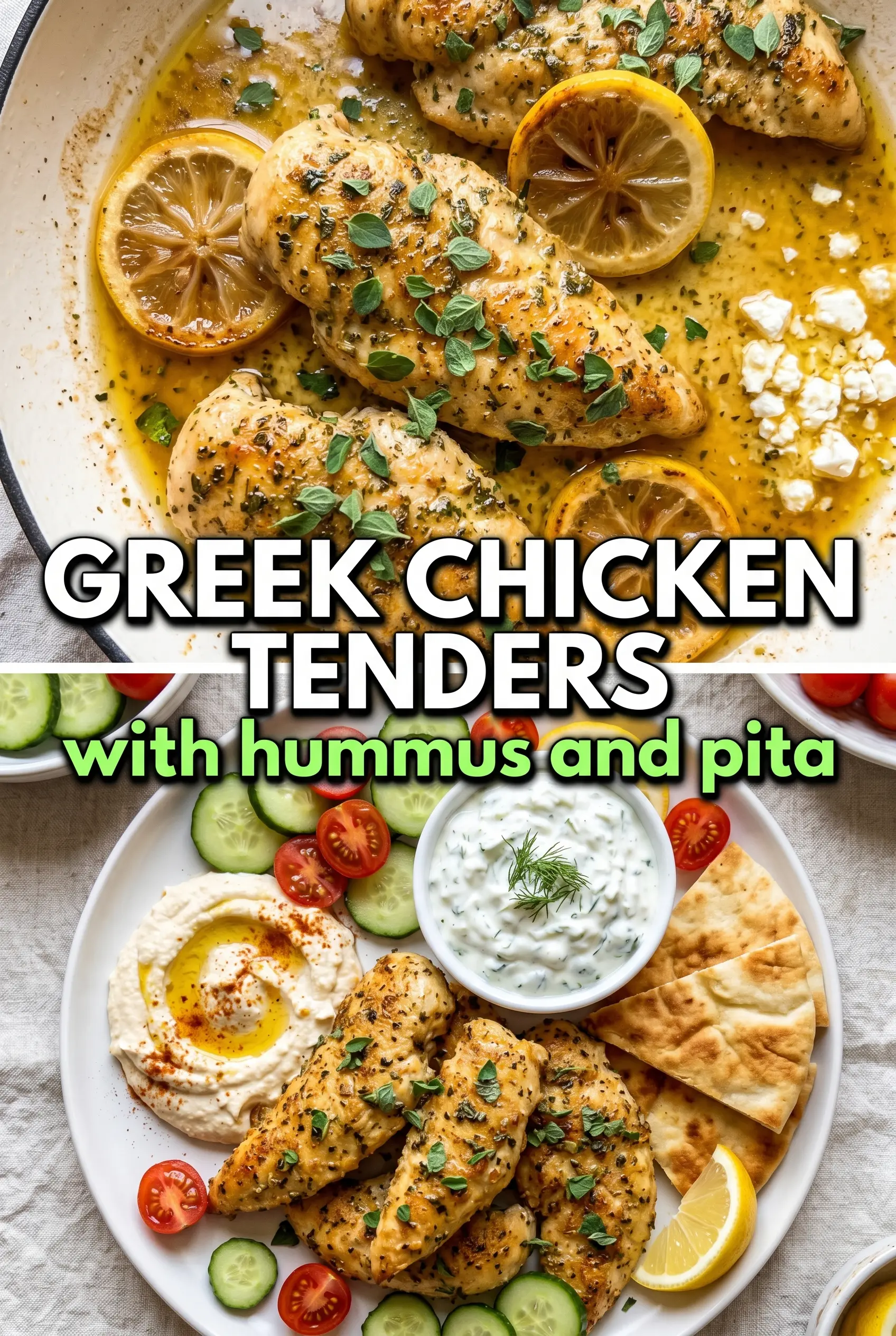
Spread the tzatziki across the platter first so the chicken lands on a cool, creamy base. Add the chicken right away, then finish with feta, Kalamata olives, cucumber slices, dill, and lemon wedges. The contrast matters here: hot chicken, cold sauce, salty feta, and crunchy cucumber make the whole dish feel complete instead of one-note.
How to Adapt Greek Chicken Tenders Without Losing the Point
Grill Pan or Outdoor Grill Version
This marinade works beautifully on a grill because the oil helps keep the tenders from sticking and the lemon gives them a bright finish. Use medium-high heat and watch for flare-ups if any marinade drips; that’s why a short marinade and a light shake-off before cooking help. You’ll lose a little of the skillet crust, but you’ll gain a little char.
Dairy-Free Plate
Skip the feta and use a dairy-free tzatziki or a cucumber-herb salad instead. The chicken itself is already dairy-free, so the swap is all about keeping that cool, creamy contrast on the plate. A little extra cucumber and dill helps replace the freshness feta would have added.
Lower-Carb Dinner Bowl
Serve the chicken over chopped romaine, cucumber, tomatoes, and tzatziki instead of pita. You keep the same Greek flavors, but the meal feels lighter and more salad-forward. This is the easiest way to stretch the chicken for lunches the next day without losing flavor.
Storage and Reheating
- Refrigerator: Store the cooked chicken in an airtight container for up to 4 days. The herbs stay strong, but the texture is best in the first couple of days.
- Freezer: The cooked chicken freezes well for up to 2 months. Freeze it without the tzatziki, then thaw overnight in the fridge so it doesn’t turn watery when reheated.
- Reheating: Warm it gently in a skillet over low heat with a splash of water or broth, or use short bursts in the microwave. High heat dries out tenders fast, which is the main mistake people make here.
The Questions Worth Asking Before You Cook These
Greek Chicken Tenders
Ingredients
Equipment
Method
- Whisk together olive oil, lemon juice, lemon zest, garlic, oregano, smoked paprika, cumin, salt, and pepper until evenly combined. Toss in chicken tenders so each piece is coated, then rest for 20 minutes.
- Heat a large skillet or grill pan over medium-high heat and add a drizzle of olive oil. Cook chicken tenders for 3-4 minutes per side until golden and flip when the first side is well-browned.
- Check doneness by aiming for an internal temperature of 165°F. Remove the tenders when they reach 165°F and let them sit briefly to keep the juices in.
- Spread tzatziki on a serving platter to form a base layer. Arrange chicken tenders over the top so the juices can mingle with the sauce.
- Scatter crumbled feta, Kalamata olives, cucumber slices, and fresh dill around the chicken. Serve immediately with warm pita and lemon wedges.