Golden seared chicken breasts with a dark, silky mushroom wine sauce have a way of making an ordinary dinner feel like you spent far more time on it than you did. The chicken stays juicy, the mushrooms turn deeply savory, and the sauce finishes glossy enough to coat the back of a spoon. It’s the kind of skillet meal that earns repeat requests because it lands right between comfort food and something you’d happily serve to guests.
The key is building flavor in stages. First, the chicken gets a real sear so the pan leaves behind those browned bits that give the sauce its depth. Then the mushrooms cook long enough to lose their moisture and take on color before the wine goes in, which keeps the sauce from tasting flat or watery. Cream and Dijon round everything out at the end without muting the wine.
Below, I’m walking through the part that matters most: how to keep the sauce from turning dull or thin, plus the small timing details that keep the chicken tender. If you’ve ever had skillet chicken come out bland or the sauce separate, this version fixes both.
The sauce thickened up beautifully and the mushrooms picked up all the flavor from the pan. I used red wine and served it over mashed potatoes — my husband asked if I could put this on the regular rotation.
Save this skillet chicken and mushroom wine sauce for the night you want a glossy pan sauce without a lot of extra dishes.
The Sear Is Doing More Than Browning the Chicken
If the chicken goes into the sauce pale and underdeveloped, the whole dish tastes thinner. The skillet needs those browned fond bits from a proper sear, because that is where the savory depth comes from. A quick turn in the pan over medium-high heat gives you color without drying out the meat, but crowding the skillet or moving the chicken too early will stop that crust from forming.
The other mistake happens later, when the sauce is simmered too hard and the cream turns flat or greasy. This recipe works because the wine reduces first, the broth adds body, and the cream goes in after the pan has been scraped clean. That order keeps the sauce glossy and concentrated instead of muddy.
What Each Ingredient Is Actually Doing in the Pan
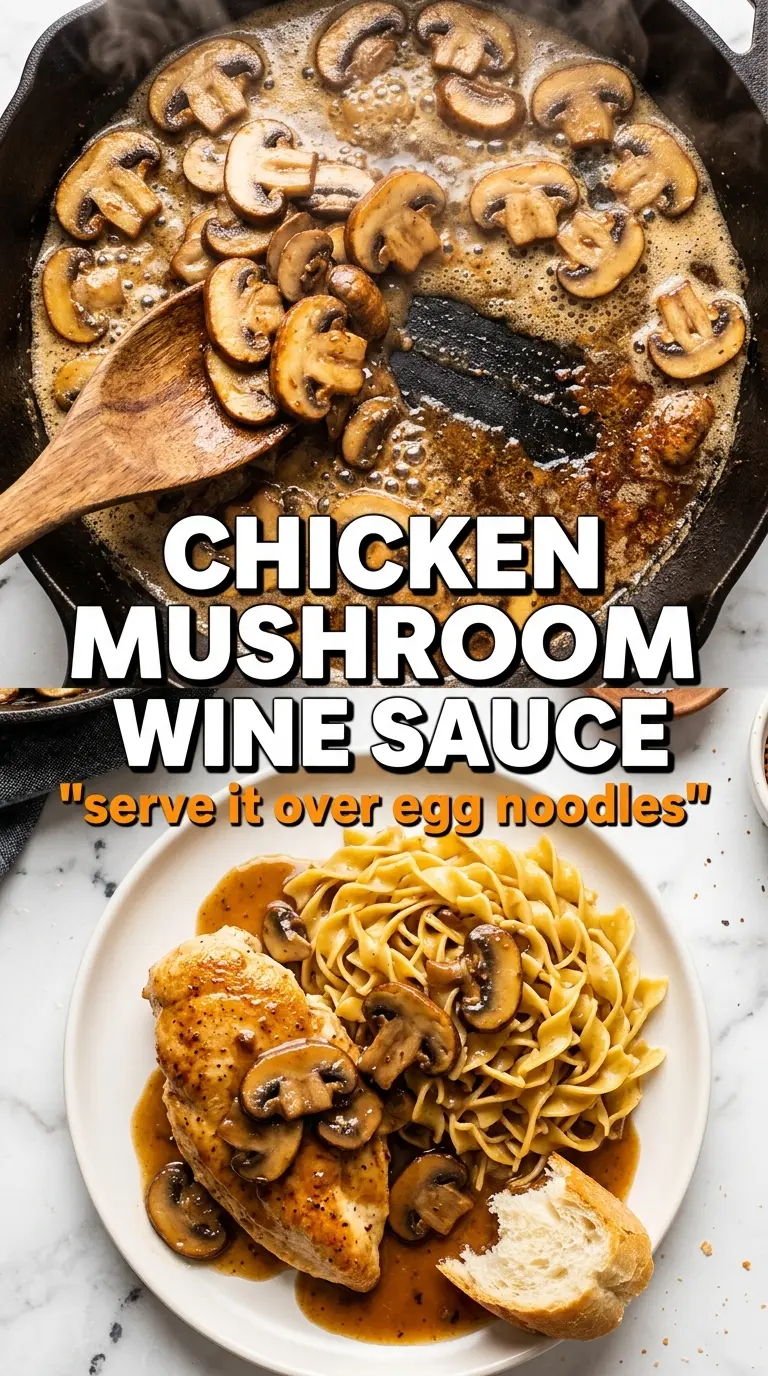
- Chicken breasts — Boneless, skinless breasts cook fast and give you clean slices for spooning sauce over the top. If yours are very thick, pound them to an even thickness so the outside doesn’t overcook before the center reaches 165°F.
- Cremini mushrooms — These hold up better than white button mushrooms and bring a deeper, earthier flavor. Slice them thick enough that they brown instead of disappearing into the sauce.
- Dry red wine — This is where the sauce gets its backbone. Use a wine you’d actually drink; the alcohol cooks off, but the flavor stays, and a harsh bottle will taste harsh in the finished pan sauce. A dry white wine works too if you want a lighter, brighter result.
- Heavy cream — Cream smooths the wine’s sharp edges and gives the sauce that silky finish. Half-and-half can work in a pinch, but the sauce will be looser and a little less stable.
- Dijon mustard — This doesn’t make the sauce taste mustardy; it sharpens the flavor and helps everything feel cohesive. Leave it out and the sauce tastes rounder but less alive.
- Fresh thyme — Dried thyme seasons the chicken, but fresh thyme at the end gives the dish lift and a clean herbal finish. Add it after the cream so the flavor stays bright instead of simmered away.
Building the Sauce So It Stays Silky
Season and Sear the Chicken First
Season the chicken generously before it hits the skillet so the surface actually tastes seasoned, not just the sauce. Lay it in the hot oil and leave it alone long enough to develop a deep golden crust; if it sticks hard, it isn’t ready to turn yet. Pull the chicken once it’s cooked through to 165°F, then set it aside while the pan is still hot and full of flavor.
Brown the Mushrooms Before the Garlic
Butter goes in next, followed by the mushrooms. Let them cook until they give up their moisture and start to look browned at the edges, because that’s when they stop tasting steamed and start tasting rich. Garlic comes only after the mushrooms are colored; if it goes in too early, it burns and turns the whole sauce bitter in one minute.
Reduce the Wine, Then Build the Finish
Pour in the wine and scrape the bottom of the pan with a wooden spoon, loosening every browned bit. Let it simmer long enough to lose the sharp raw edge and reduce by about half, then add broth, cream, Dijon, and thyme. The sauce should thicken enough to coat the mushrooms and cling lightly to the chicken; if it still looks thin, give it another minute or two instead of rushing the return of the chicken to the pan.
Return the Chicken at the Very End
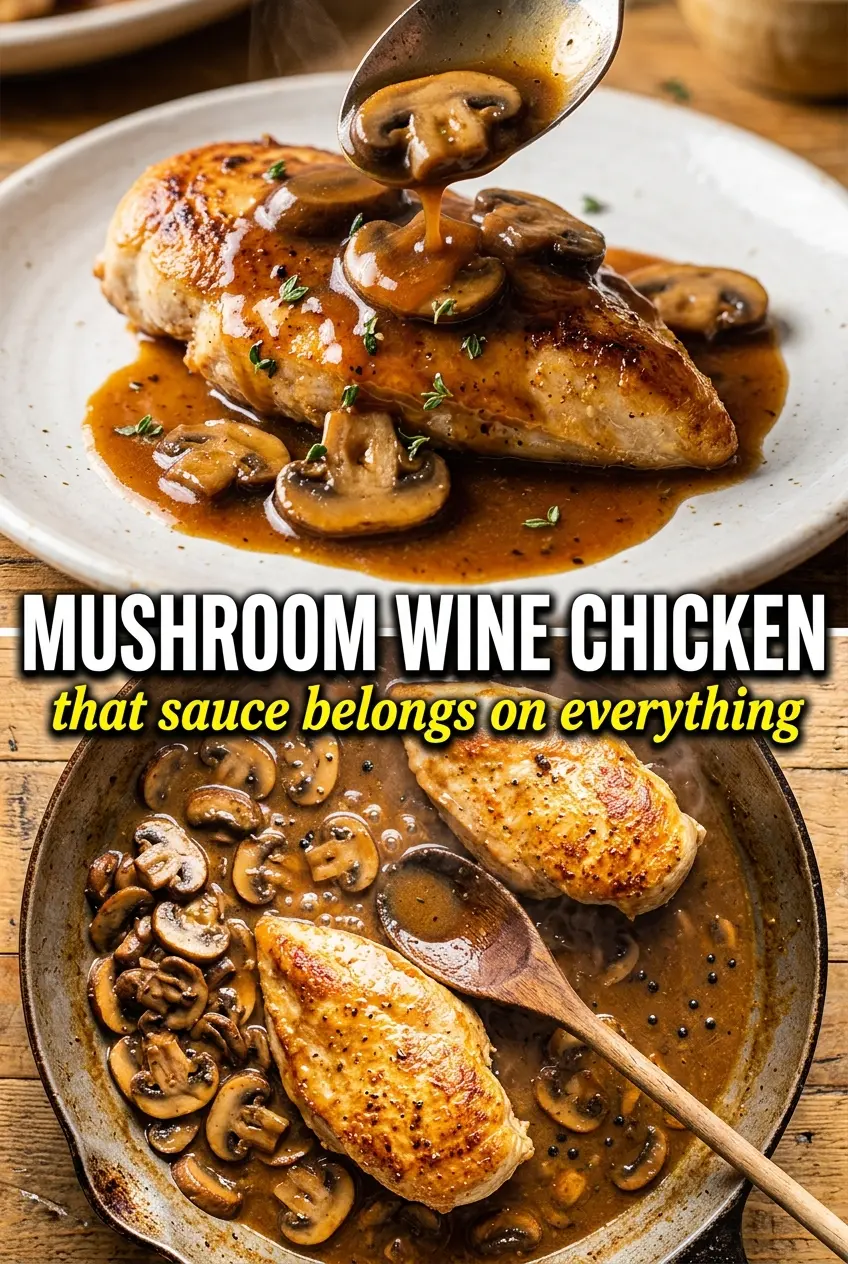
Slip the chicken back into the skillet and spoon sauce over the top so it warms through without overcooking. This final simmer is just to bring everything together, not to cook the chicken from scratch again. Finish with fresh thyme sprigs for color and a clean herbal note that cuts through the richness.
How to Adapt This for a Lighter Plate or a Bigger Dinner
Use chicken thighs instead of breasts
Boneless thighs stay juicier and give the sauce a richer, more savory feel. They need a few extra minutes in the pan, but they’re more forgiving if your skillet runs hot or the pieces aren’t perfectly even.
Make it dairy-free
Swap the butter for more olive oil and use full-fat coconut cream or an unsweetened dairy-free cooking cream in place of the heavy cream. The sauce will still be silky, but the finish will taste a little less classic and a little more rounded and nutty.
Use white wine for a brighter sauce
A dry white wine gives the sauce a lighter color and a cleaner finish. It’s especially good if you want the mushroom flavor to stay front and center instead of leaning deep and earthy like a Marsala-style sauce.
Stretch it into a full meal for more people
Add an extra half batch of mushrooms and a splash more broth if you want enough sauce for rice, mashed potatoes, or noodles. The key is keeping the skillet wide enough that the mushrooms brown instead of steaming; if needed, cook them in two batches.
Storage and Reheating
- Refrigerator: Store leftovers in an airtight container for up to 3 days. The sauce will thicken as it chills.
- Freezer: It freezes, but cream sauces can separate a little when thawed. If you freeze it, cool completely first and rewarm gently, stirring well.
- Reheating: Reheat in a covered skillet over low heat with a splash of broth to loosen the sauce. High heat is the usual mistake here; it tightens the chicken and can make the cream look broken.
Answers to the Questions Worth Asking
Skillet Chicken and Mushroom Wine Sauce
Ingredients
Equipment
Method
- Season chicken generously with salt, pepper, garlic powder, and dried thyme. Heat olive oil in a large skillet over medium-high heat until shimmering.
- Sear chicken for 5-6 minutes per side, until golden and cooked through to 165°F. Remove chicken to a plate.
- Melt butter in the same pan. Cook mushrooms over medium-high heat for 5-6 minutes until deeply golden.
- Add minced garlic and cook for 1 minute. Stir to coat the mushrooms in the browned butter.
- Pour in red wine and deglaze, scraping up all browned bits from the pan. Simmer for 3 minutes until reduced slightly.
- Add chicken broth, heavy cream, Dijon mustard, and fresh thyme leaves. Simmer for 5-6 minutes until the sauce thickens and looks dark and glossy.
- Return chicken to the pan and spoon sauce over each breast. Simmer just until reheated and coated.
- Garnish with fresh thyme sprigs and serve. Plate with extra sauce pooled around the chicken for a dramatic finish.