Juicy chicken breasts in creamy garlic sauce hit that sweet spot between weeknight practical and dinner-party worthy. The chicken stays tender from a hot sear, and the sauce cooks down into something velvety enough to cling to every slice instead of running all over the plate. That’s the difference between a pan of chicken with sauce and a dish people remember.
This version leans on garlic in two ways: first by blooming it in butter until it turns fragrant and lightly golden, then by letting the cream and Parmesan mellow it into a sauce that tastes full and round instead of sharp. A splash of white wine gives the pan sauce a little lift, but chicken broth works too if that’s what you’ve got on hand. The result is rich without feeling heavy, with enough sauce to spoon generously over each breast.
Below, I’ve included the small details that keep the sauce smooth, the chicken juicy, and the garlic from burning. Those are the parts that make this recipe worth repeating.
The sauce thickened up perfectly and didn’t separate, even after I added the Parmesan. I used broth instead of wine and it still tasted rich and garlicky.
Save these juicy chicken breasts in creamy garlic sauce for the nights when you want a silky skillet dinner with almost no cleanup.
The Trick to Keeping the Sauce Smooth After the Parmesan Goes In
The most common mistake here is rushing the cheese. Parmesan melts beautifully, but only if the cream is at a gentle simmer, not a hard boil. If the pan is too hot, the sauce can turn grainy or look oily at the edges before it thickens properly. Low, steady heat gives the cheese time to melt into the cream instead of clumping up.
Another thing that matters is the order. Garlic goes into the butter first so it perfumes the pan, then the wine or broth lifts every browned bit off the bottom before the cream goes in. Those bits are where a lot of the flavor lives. If you skip the deglazing step, the sauce tastes flatter and you miss the depth that makes this dish stand out.
What Each Ingredient Is Actually Doing in This Skillet
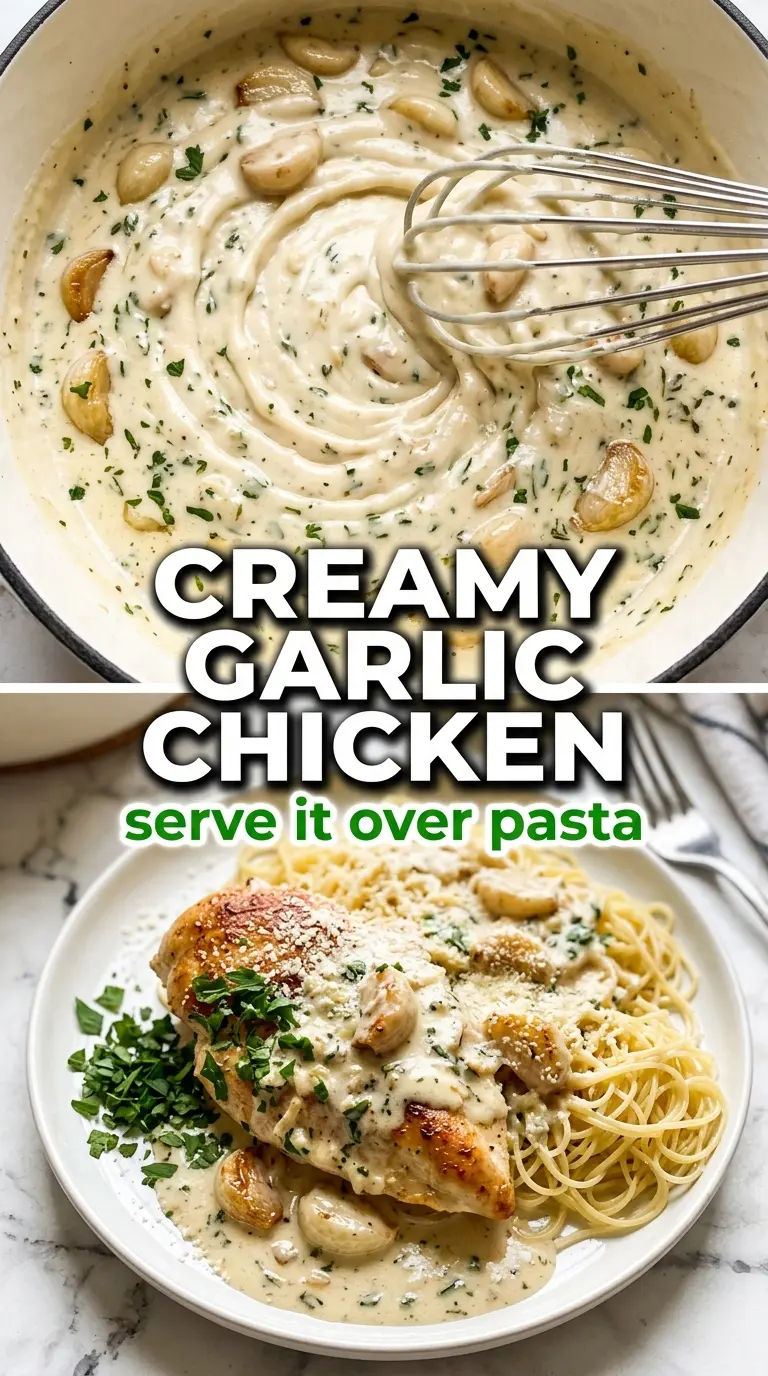
- Chicken breasts — Boneless, skinless breasts give you that clean, lean base, but they need a hot sear and a short rest so they stay juicy. If yours are thick, pound them to even thickness so the pan cooks them at the same rate from edge to center.
- Garlic — Fresh minced garlic is nonnegotiable here. Jarred garlic tastes dull in a sauce this simple, and roasted garlic alone would make it sweeter than intended. The brief cook in butter softens the bite without losing the garlic punch.
- Heavy cream — This is what gives the sauce body and stability. Half-and-half won’t hold up as well once the Parmesan goes in, and the sauce is more likely to split if it boils.
- Parmesan — Use finely grated Parmesan, not a coarse shred that takes forever to melt. The cheese thickens the sauce and adds salt, so taste before adding any extra at the end.
- White wine or broth — Wine adds brightness and a little acidity, which keeps the sauce from feeling heavy. Chicken broth is the best swap if you don’t cook with wine; the sauce will be a little rounder and less sharp, but still flavorful.
- Cayenne and smoked paprika — The paprika helps the chicken brown nicely and adds a subtle warmth, while the cayenne keeps the cream sauce from tasting flat. Use a light hand if you want the garlic to stay center stage.
Building the Sauce in the Same Pan You Sear the Chicken In
Season and Sear the Chicken First
Season both sides of the chicken breasts before they hit the skillet, then cook them in olive oil over medium-high heat until they’re deep golden on the outside. The pan should be hot enough that the chicken sizzles immediately; if it just sits there, you won’t get the crust that keeps the juices inside. Pull them once the internal temperature reaches 165°F, then set them aside on a plate while you make the sauce.
Cook the Garlic in Butter, Not in Oil Alone
Use the same skillet and add butter after the chicken comes out. The butter carries the garlic flavor better than oil and gives you a richer base, but garlic burns fast, so keep it moving and watch for the edges to turn just barely golden. If it goes dark, start over; burnt garlic turns bitter and the whole sauce will taste harsh.
Deglaze, Then Simmer Gently
Pour in the wine or broth and scrape up every browned bit from the bottom of the pan. Let it bubble for a minute or two so the sharp alcohol cooks off if you’re using wine, then add the cream and bring it to a gentle simmer. Don’t let it boil hard. That’s how cream gets greasy or breaks before it has a chance to thicken.
Finish With Cheese and Bring the Chicken Back
Stir in the Parmesan, Italian seasoning, and cayenne, then let the sauce simmer until it turns glossy and coats the back of a spoon. Slide the chicken back into the skillet and spoon the sauce over the top so it warms through without overcooking. A final sprinkle of thyme and parsley gives the dish a fresh finish that cuts through the richness.
Three Ways to Bend This Recipe Without Losing What Makes It Good
Make it dairy-free with coconut cream
Swap the heavy cream for full-fat coconut cream and use a dairy-free Parmesan-style cheese if you want a dairy-free version. The sauce will be a little sweeter and less sharp, so keep the garlic and black pepper bold. It won’t taste exactly the same, but it still gives you a thick, spoonable skillet sauce.
Use chicken thighs for more forgiveness
Boneless thighs work well if you want a richer, more forgiving cut. They take a little longer to cook, but they stay juicy even if your timing is a bit loose. The sauce clings just as well, and the extra fat in the thighs makes the whole dish taste a touch more luxurious.
Skip the wine and use broth only
Chicken broth is the cleanest substitute for the white wine. You lose the little hit of acidity that wine brings, so add an extra squeeze of lemon at the end if you want the sauce to taste brighter. This is the easiest change when you’re cooking for kids or just don’t have wine open.
Make it gluten-free without changing the method
This recipe is naturally gluten-free as written as long as your broth is certified gluten-free. The sauce thickens from reduction and Parmesan, not flour, so you don’t need a separate slurry or roux. That keeps the texture smooth and the method simple.
Storage and Reheating
- Refrigerator: Store leftovers in an airtight container for up to 3 days. The sauce will thicken as it chills.
- Freezer: I don’t recommend freezing this one. Cream sauces can separate after thawing, and the chicken can turn a little stringy.
- Reheating: Warm gently in a skillet over low heat with a splash of broth or cream, stirring often. High heat is what usually breaks the sauce, so keep it slow and steady.
Questions I Get Asked About This Recipe

Chicken Breasts in Creamy Garlic Sauce
Ingredients
Equipment
Method
- Season boneless skinless chicken breasts with salt, pepper, and smoked paprika to taste. Heat olive oil in a large skillet over medium-high heat until shimmering.
- Add chicken breasts to the skillet and sear 5-6 minutes per side until golden. Cook until the internal temperature reaches 165°F, then remove the chicken to a plate.
- Melt butter in the same pan over medium heat. Add garlic and cook for 2 minutes, stirring constantly, until fragrant and starting to turn golden.
- Deglaze with dry white wine or chicken broth and cook 2 minutes. Stir in heavy cream and bring the mixture to a simmer.
- Stir in Parmesan cheese, Italian seasoning, and cayenne pepper. Simmer 4-5 minutes, stirring occasionally, until the sauce is thick and glossy.
- Return the chicken breasts to the pan. Spoon garlic cream sauce over each breast so the sauce pools around the edges.
- Garnish with fresh thyme and parsley. Let sit for 1-2 minutes so the sauce clings to the chicken before serving.